In the fall of 2014 I began what I thought at the time was going to be a “short-term” project photographing WWII “bomber jackets.” Eight years later, after having photographed 162 jackets in twelve different museums, and a number of WWII veterans all across the USA, a self-published, award-winning book was the result.
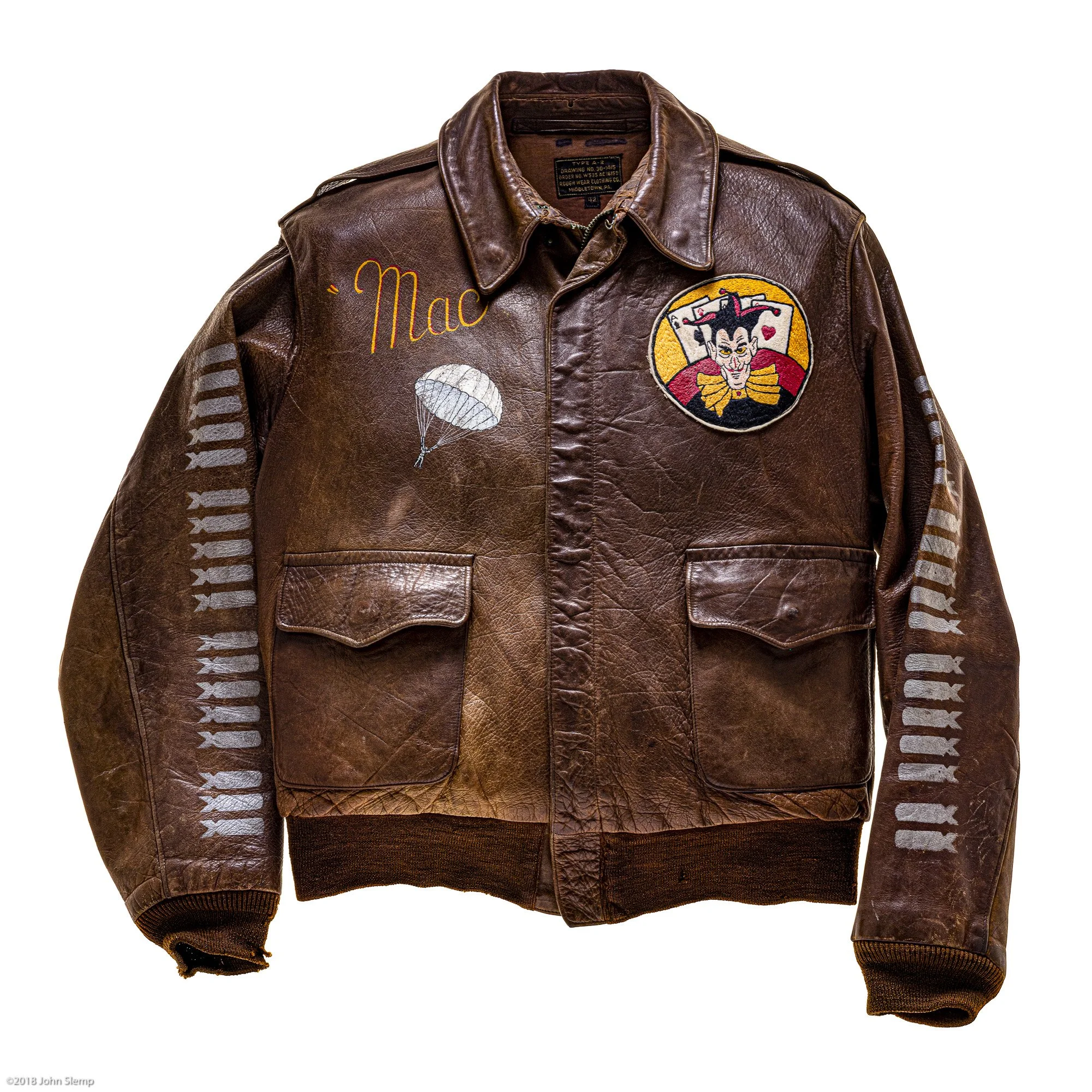
Calvin E. McCart flew 35 successful missions over Europe, signified by the 35 bombs painted on the sleeves of his jacket. Throughout the course of his 35 missions McCart survived 3 emergency landings, and the parachute denotes a bail-out.
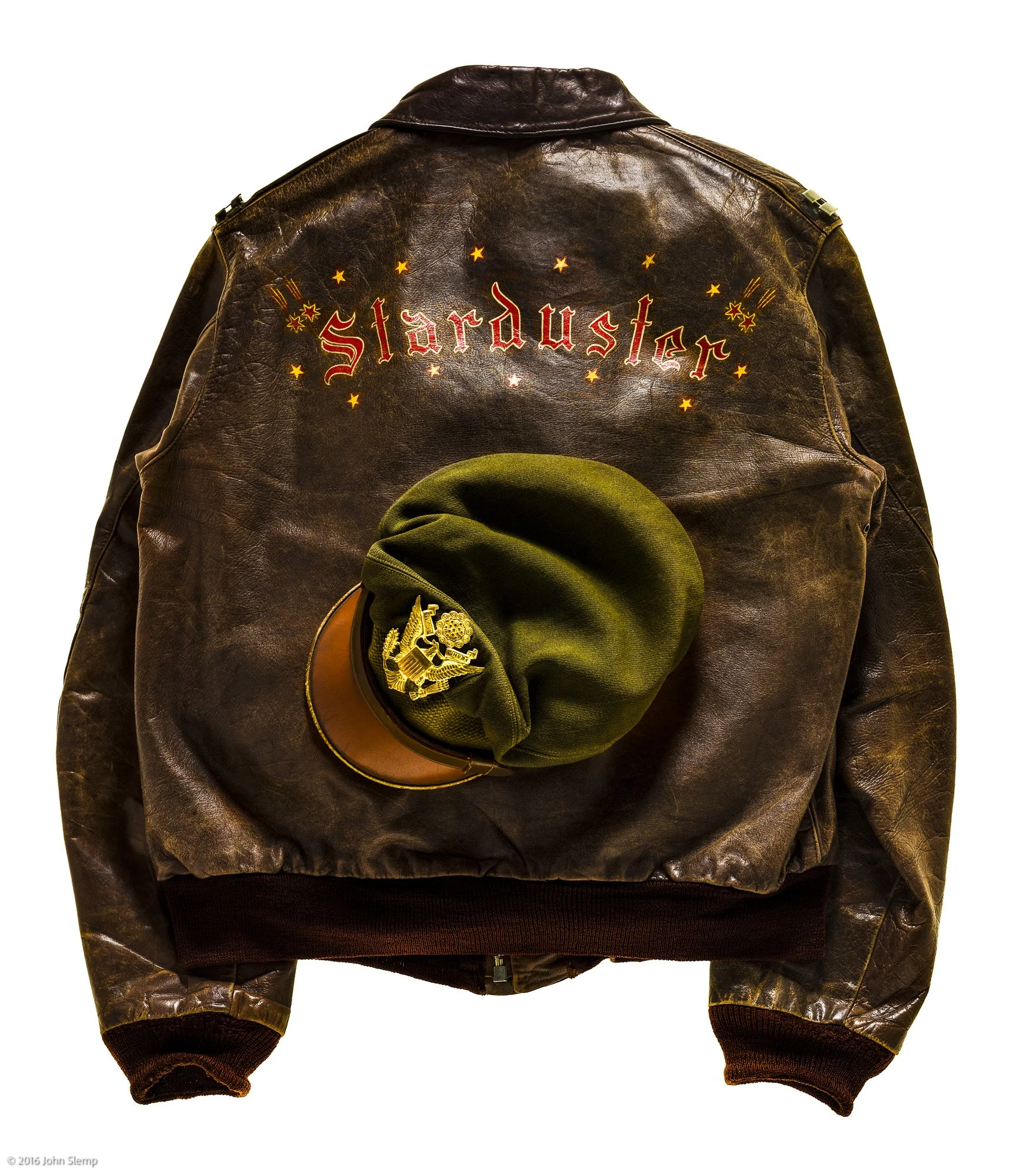
Ralph A. Morrow, Jr. was a B-24 co-pilot, completing 33 missions over occupied Europe. The 801st Bomb Group was established as part of the Eighth Air Force in late March 1944 to carry out 'Carpetbagger' missions. These were night missions over France and other parts of occupied Europe to support resistance forces by dropping in agents, supplies and leaflets. The B-24 Liberators flown by the Group were painted black to help the crews evade detection by enemy anti-aircraft positions.
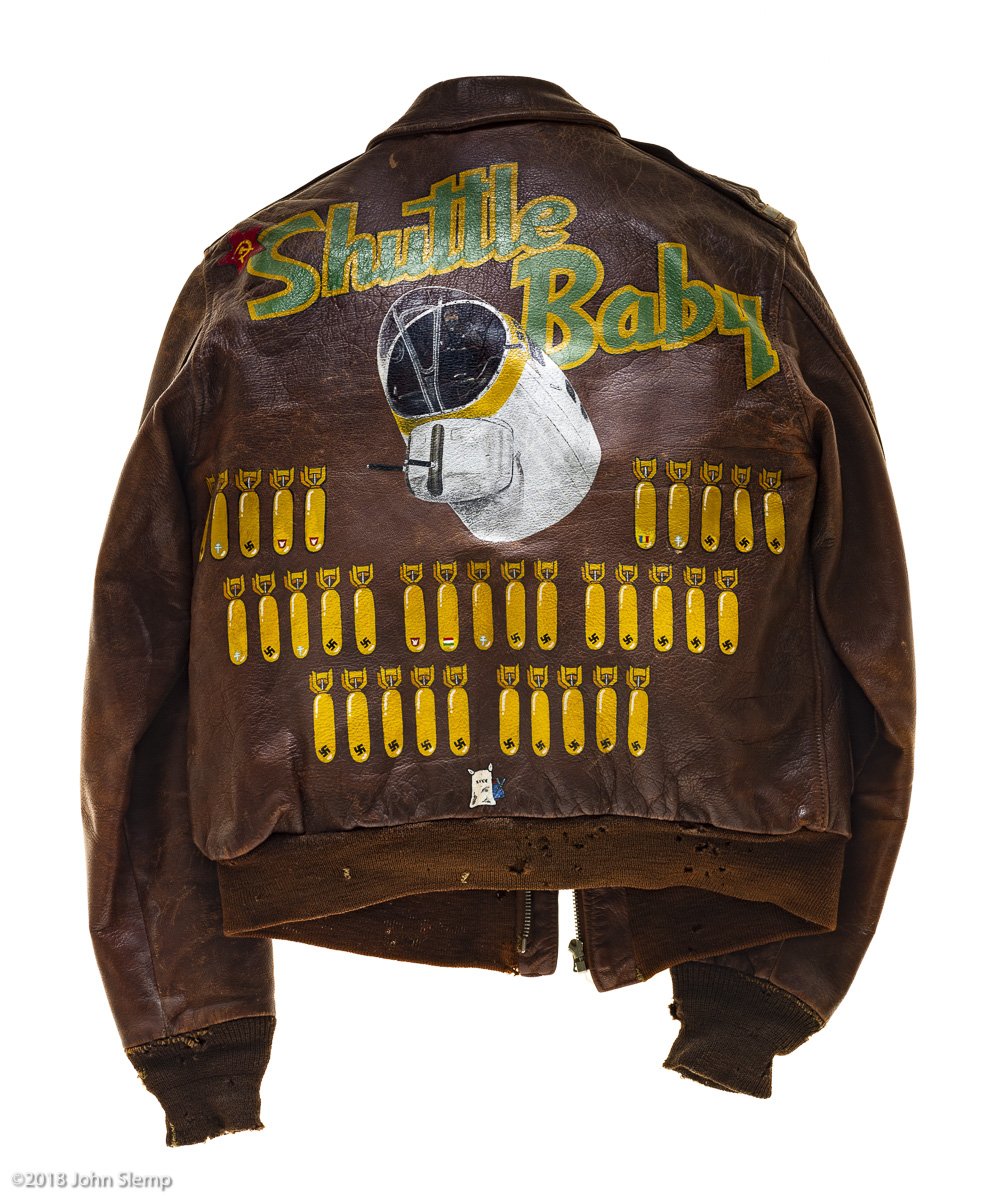
This type A-2 flight jacket belonged to William Quinn, a bombardier attached to the 570th squadron of the 390th Bomb Group. There are 35 bombs, signifying Quinn’s 35 successful missions. Also notice the Russian Red Star symbol, denoting a "shuttle run" to Russian controlled territory, and a windmill and white food bag, denoting participation in Operation Chowhound, the late-war effort to drop food to the starving Dutch people.
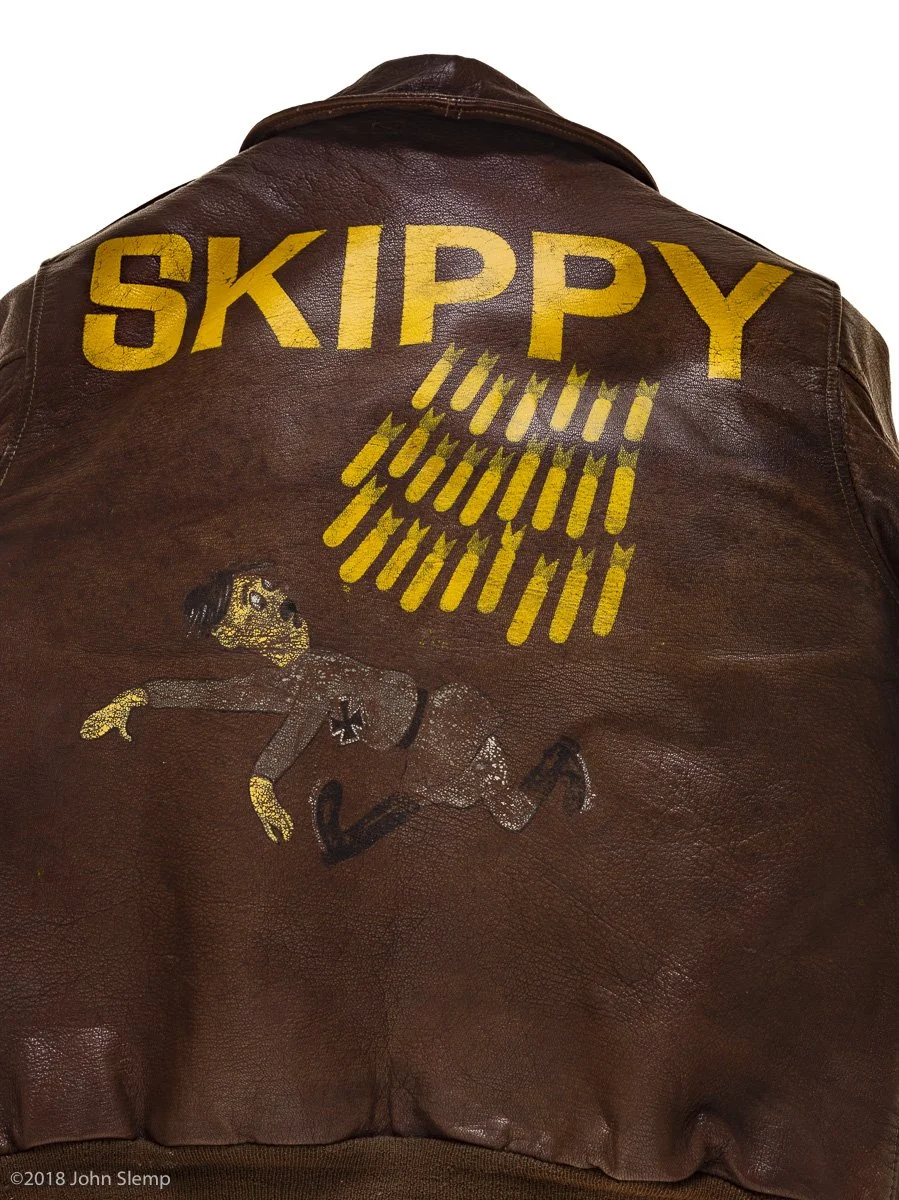
This jacket belonged to Joseph F. Doyle, a navigator attached to the 570th squadron of the 390th Bomb Group. “Skippy” and her crew flew 30 missions before crashing on their 31st mission, a raid on an airfield in Villacoublay, France, on February 5, 1944. One of the engines on “Skippy” burst into flames just after getting into formation and crossing the English channel. The pilot turned the plane around, and the crew bailed out successfully over the channel as “Skippy” crash landed in England, about 100 yards from the coast.
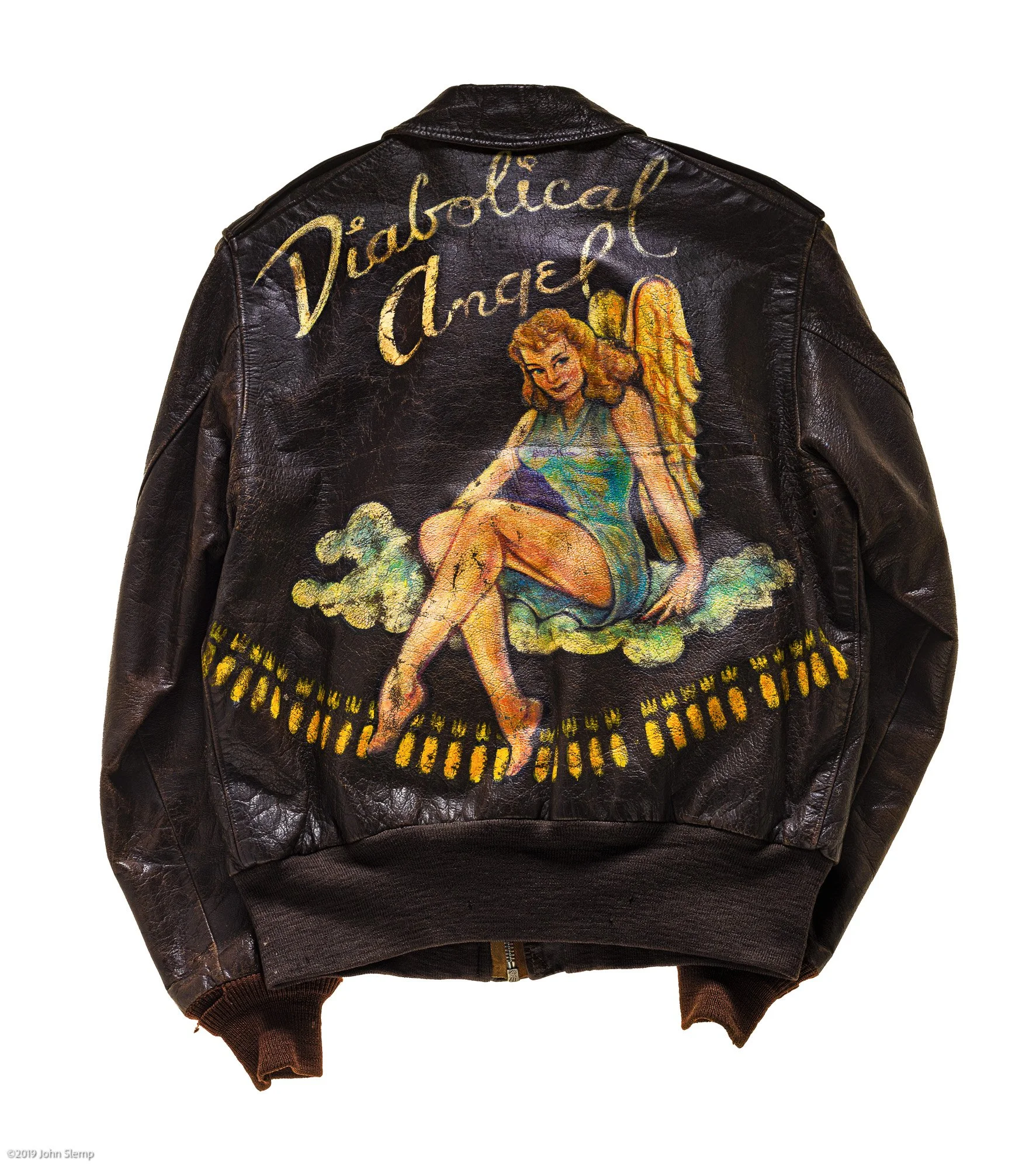
This jacket was owned by a member of the 401st Bomb Group, and was painted by Harry Holl, who became a famous painter and potter after the war. One of two in existence.
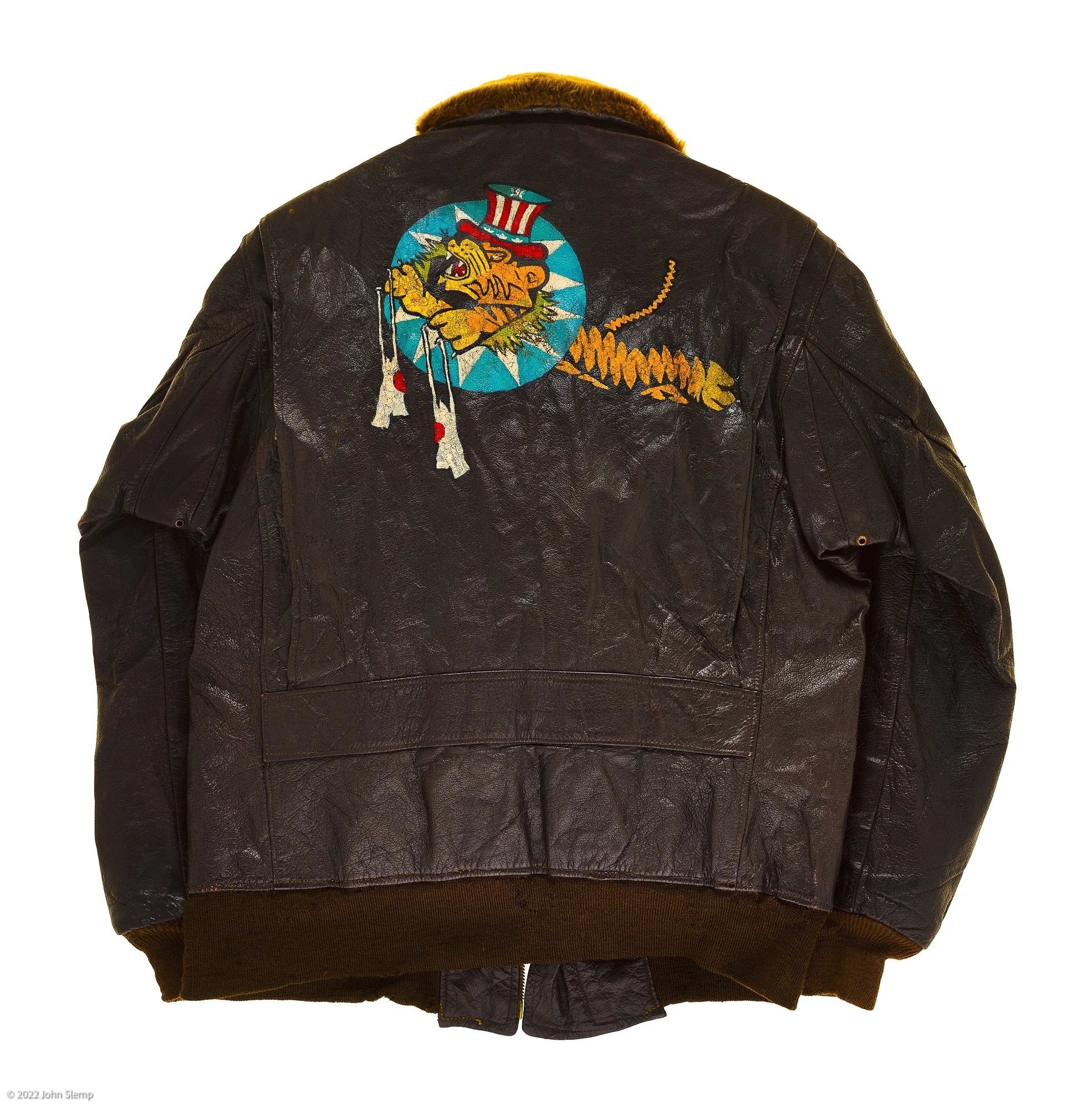
An M-422 Navy jacket, worn by Major Tex Hill of the famed "Flying Tigers" in China. He later became a brigadier general in the Texas National Guard.
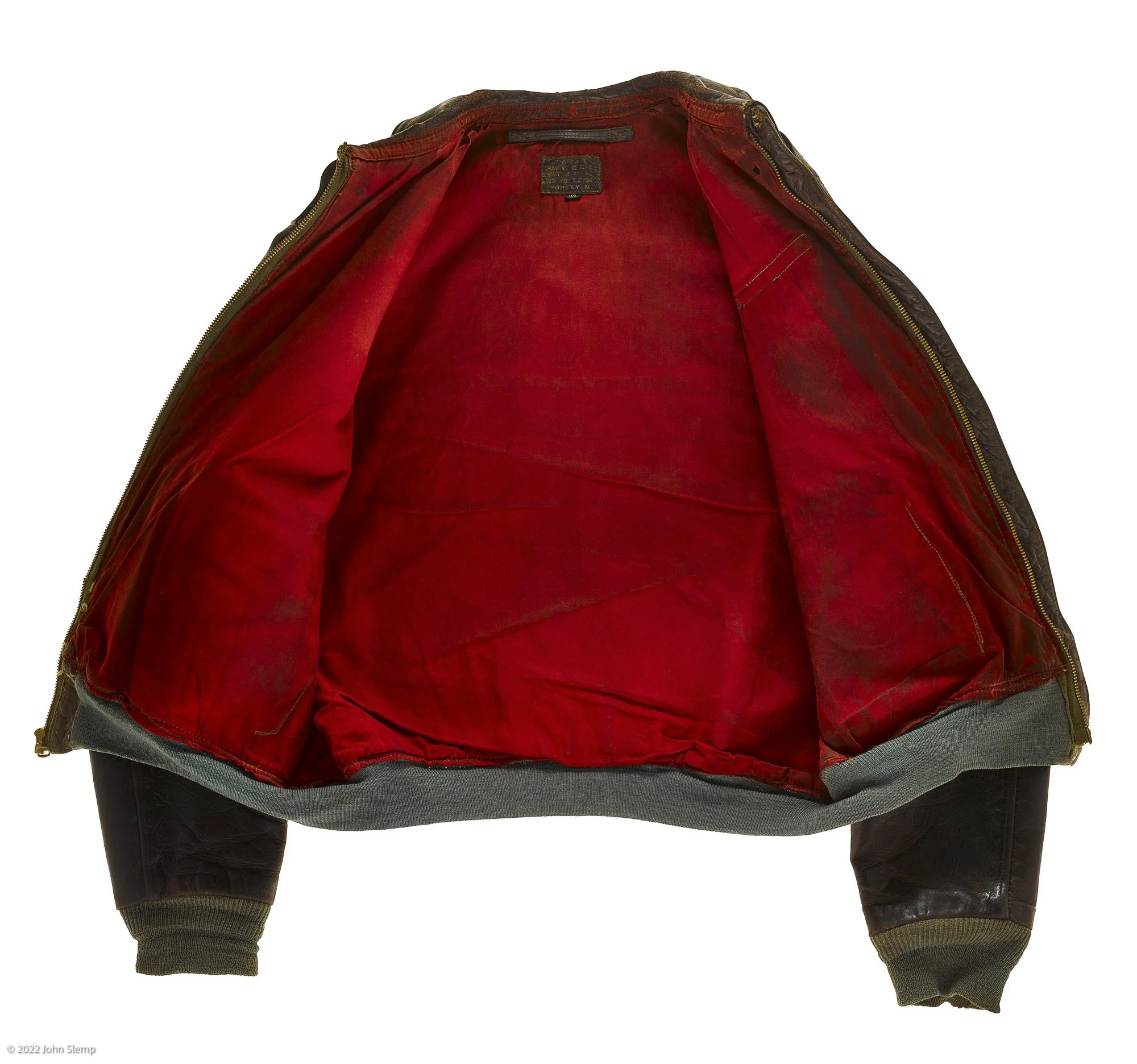
Col. Hubert A. "Hub" Zemke was a triple ace, having shot down more than 15 enemy aircraft. In his unit, if one became an "Ace," you could have a red liner sewn into your jacket, which in this case has no other adornment.
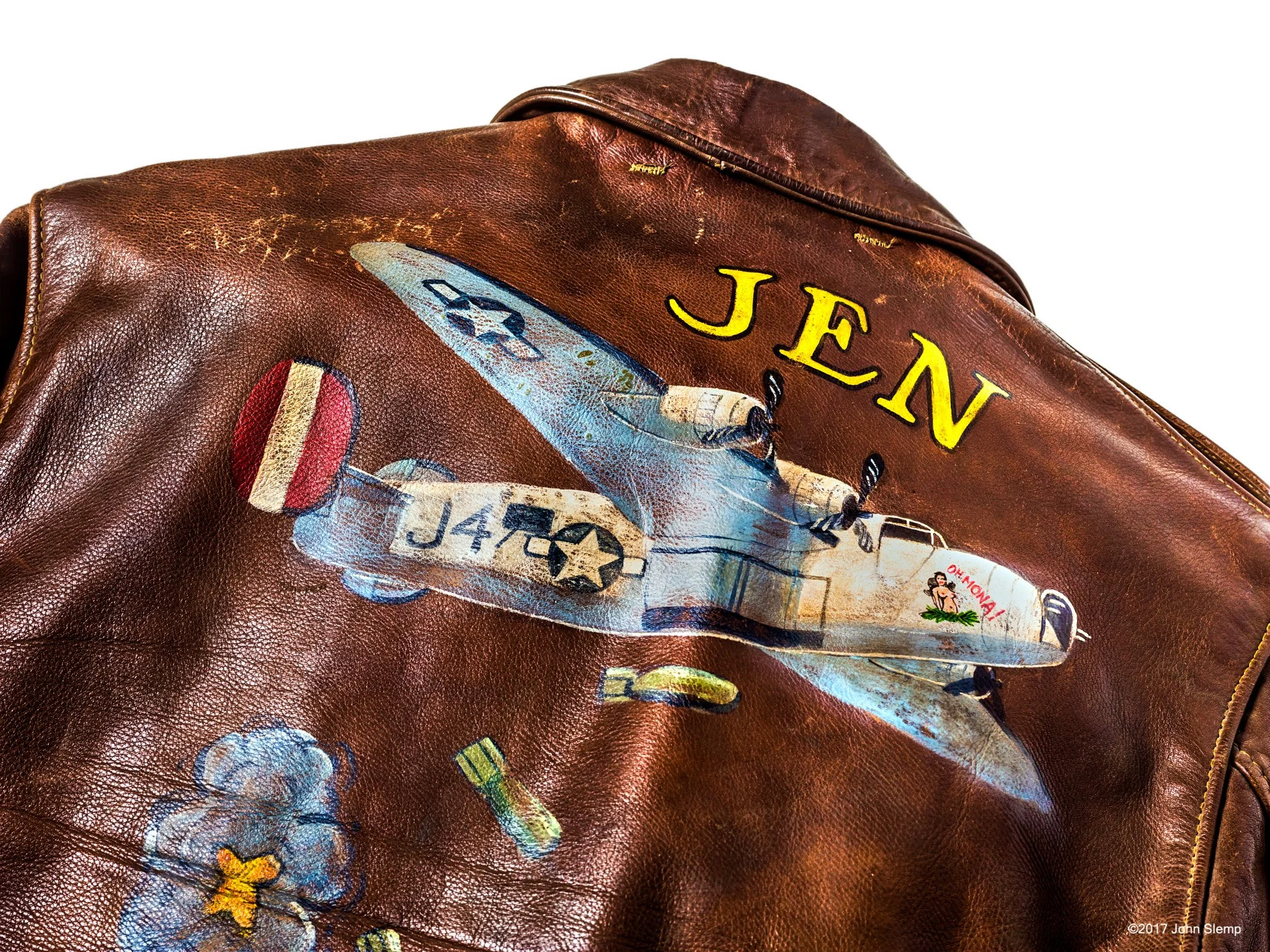
Dale Dyer was a B-24 lead bomber pilot in WWII, flying out of England. His wife's name was Virginia, thus the "Jen" on the back of the jacket.
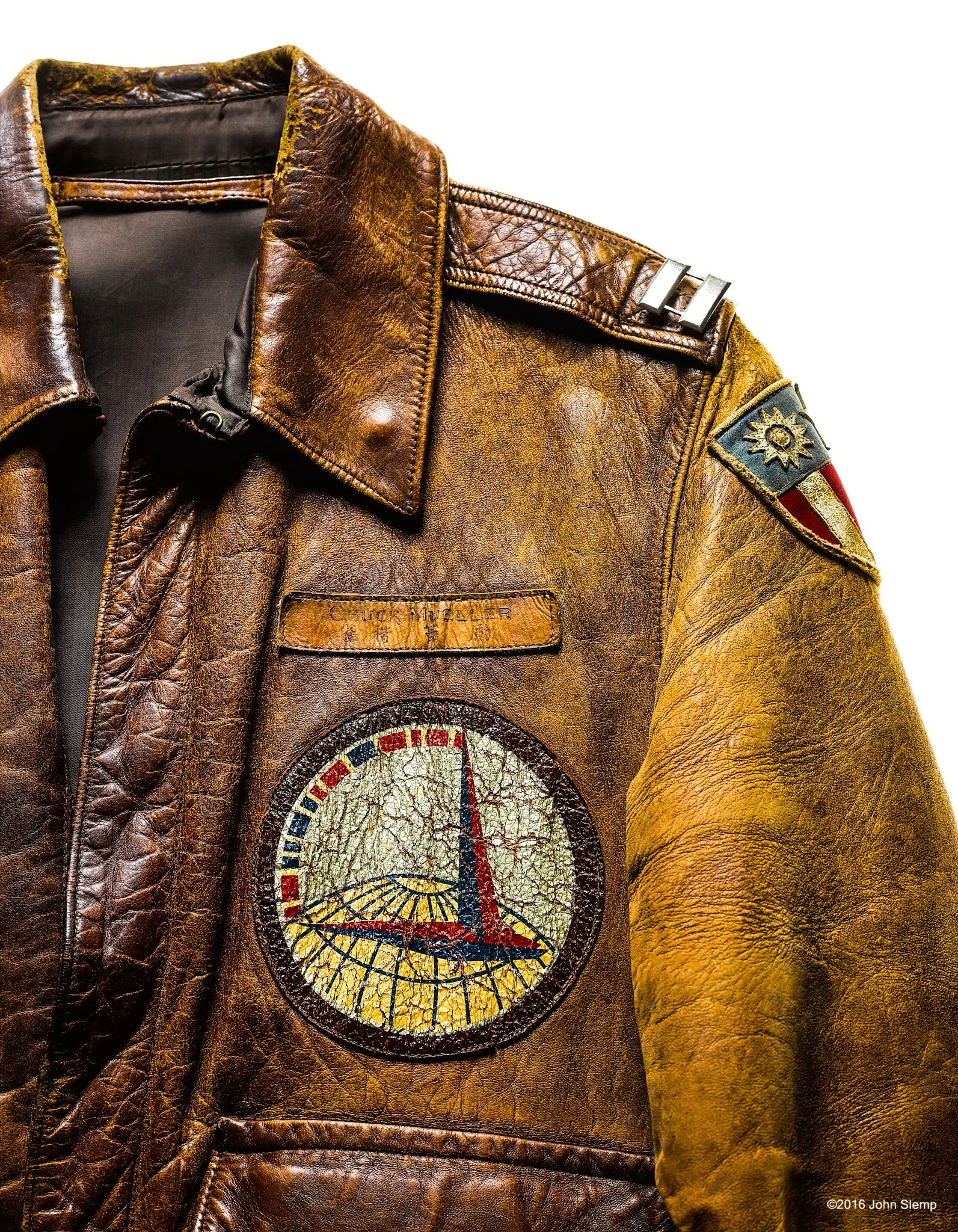
Captain Charles A. Mueller still had family in Germany when WWII began and therefore was not allowed to participate in the European Theater. He flew resupply missions over the Himalayan Mountains, otherwise known as "the Hump," in the China/Burma/India (CBI) Theater of operations
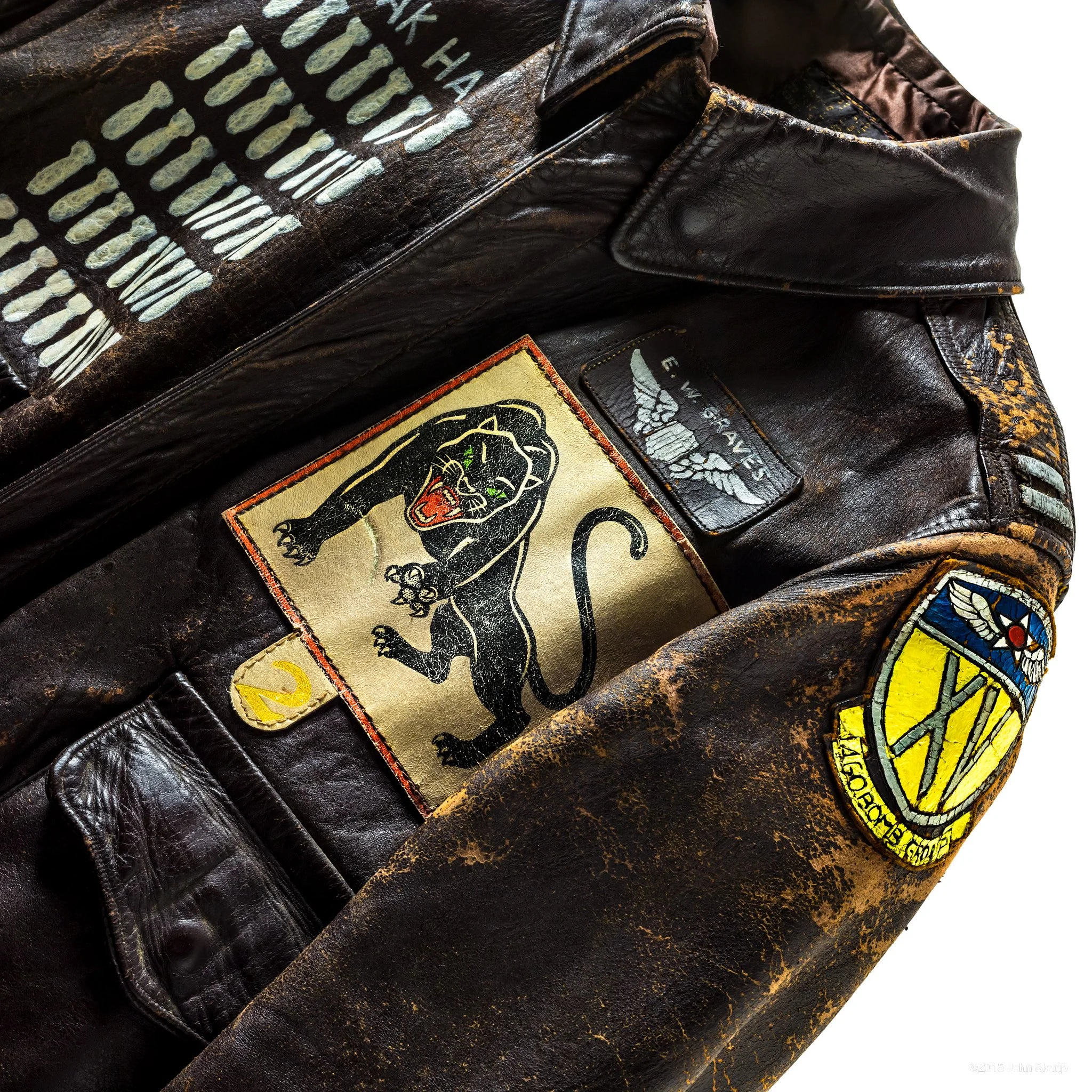
Captain Everett Graves was a B-24 Liberator pilot, and member of the 460th Bomb Group, the Black Panthers. Wounded in the shoulder and neck on this ninth mission over the marshalling yards of Castel-Maggiore, Italy, he was hesitant to go back into combat...but he did, completing 50 missions.
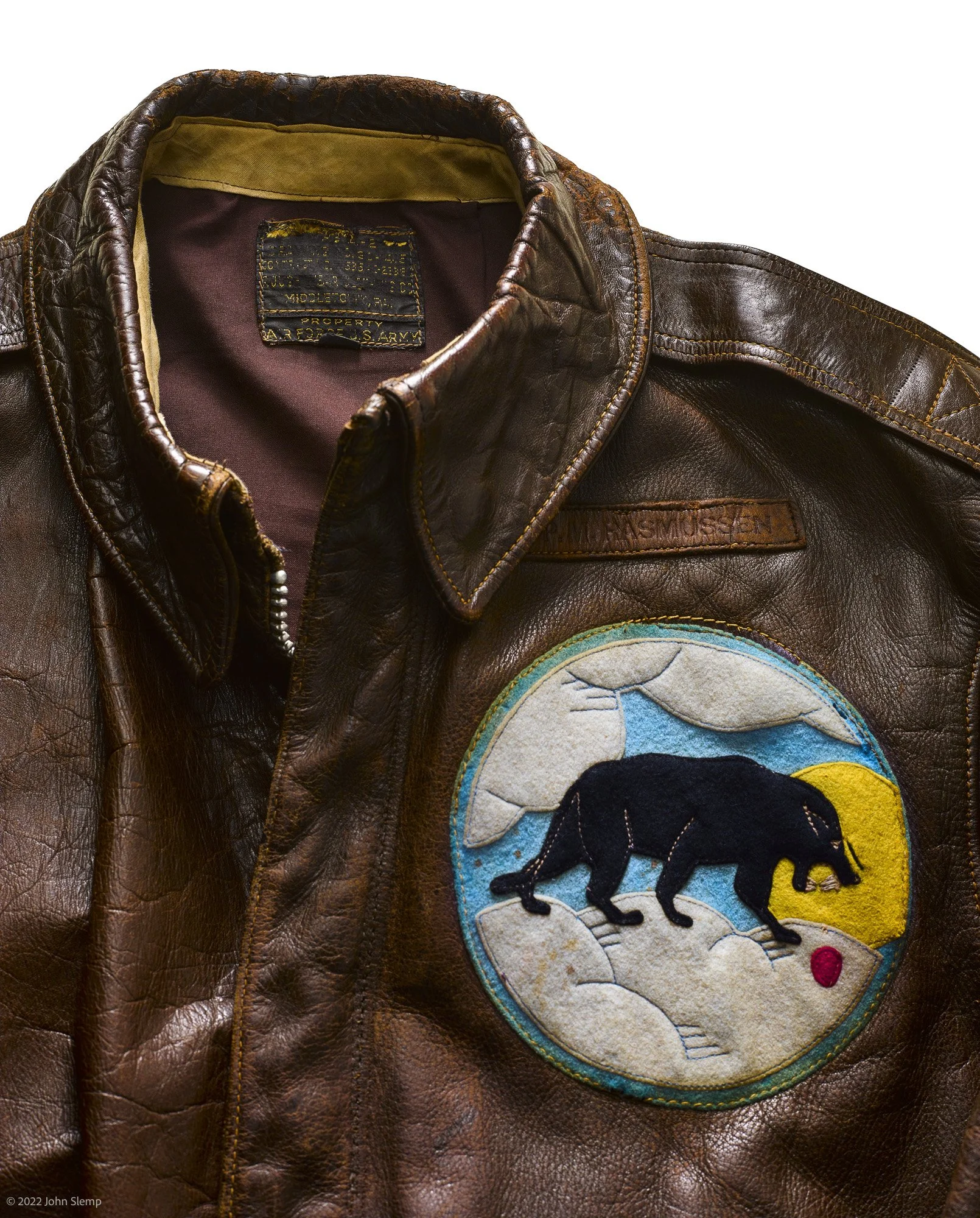
Lt. Phillip Rasmussen was one of the few American fighter pilots to get off the ground during the attack on Pearl Harbor on 7 December, 1941. Still in his pajamas, he shot down one Japanese plane, and had over 500 holes in his aircraft when he landed.
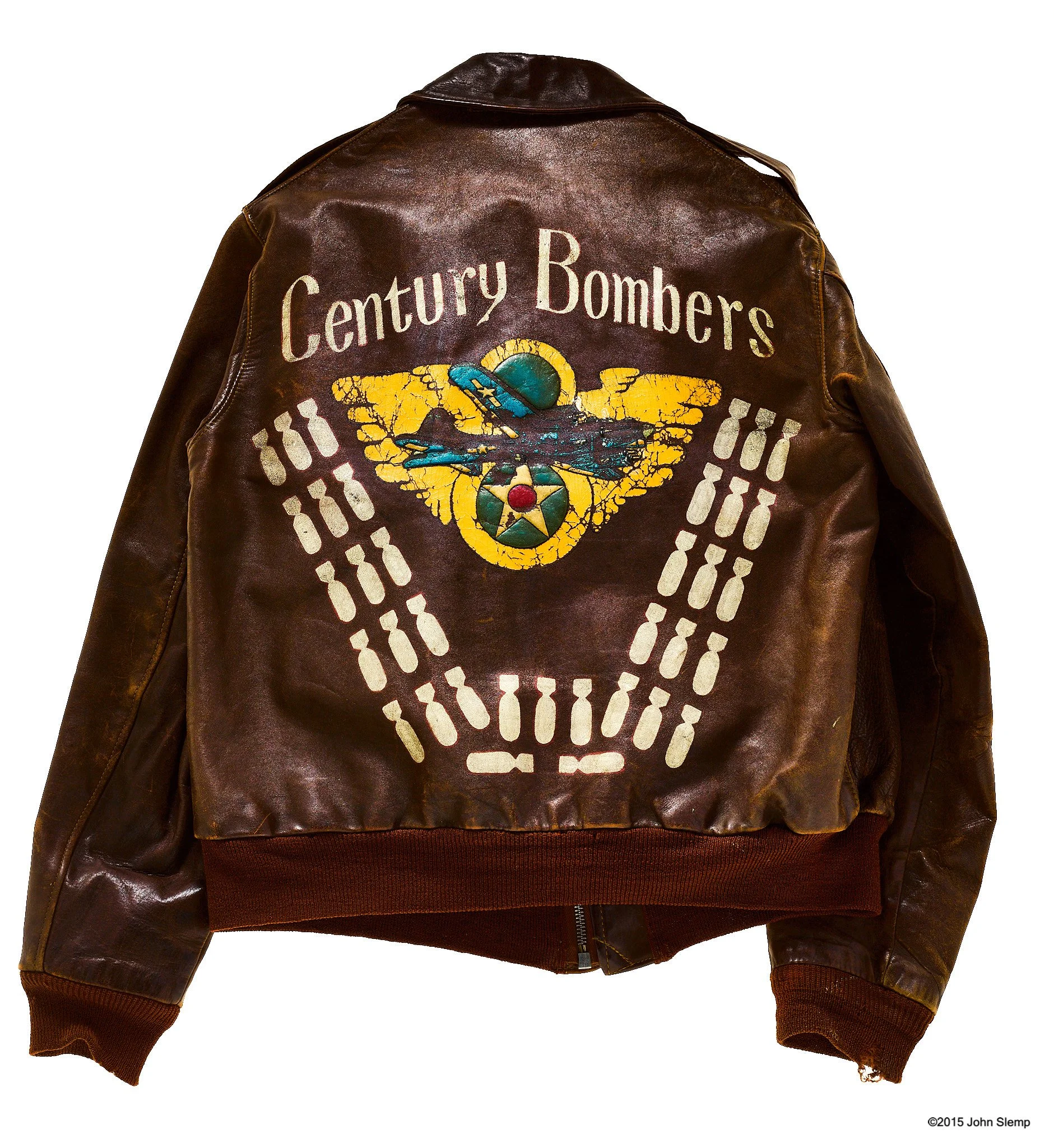
Cpt. Frederick G. Smith had this jacket painted after his original wore out. This jacket had belonged to a fellow pilot who was killed in action. The 100th Bomb Group was known as the "Century Bombers."