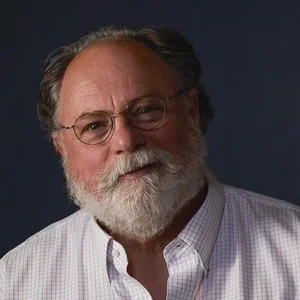
Recent Interview with Cameron Davidson…

A "Gull Wing" SR-10 Stinson, otherwise known as the "Shell Oil" Stinson. Photographed during AirVenture 2010 in Oshkosh, Wisconsin for Goodyear Aviation Tires. It was flown by JImmy Doolittle for two years just prior to WWII. ©2010 John Slemp
It is a great pleasure to share my recent interview by a well-known US photographer, Cameron Davidson. He asks five questions, which are answered in detail, along with five images. Cameron is very well known in the commercial photography world, and it is a real treat, both personally and professionally, to be featured there. Check it out when you have a free moment...
QUESTIONS:
1. Tell me a bit about your show and some of the recent work you’ve been doing.
2. You shoot in a very specific niche, Aviation. Tell me about your love affair with aircraft and are you also a pilot?
3.You recently plunged into the big-bad world of medium format high-end digital. How is that impacting how you shoot and what do you see as the benefits to you and to your clients.
4. What is the most awe inspiring aviation moment that you have photographed?
5. What aircraft would you most like to photograph and more importantly, where and why?
6. (Follow on) What advice would you give a young photographer about to enter our industry, specifically about niche markets and marketing?
RESPONSE:
Our recent exhibition at the Tellus Science Museum (Georgia’s second largest!) featured 16 different images, and outlined the progression of aviation technology, from the Wright Flyer, up to the F-22 Raptor. Many of the images were shot within the last year using the Canon 5D MKII, so we’d have files large enough to create prints up to 5 feet wide, of which there were two that size. Most were in the 30” x 40” range, and held up beautifully. Additionally, there was a “touch” display box that held a piece of carbon fiber commonly used in aircraft production today, as well as a piece of corrugated aluminum, originally used in constructing a Ford Tri-Motor. The kids really enjoyed this part of the exhibition.
As a part of the Reaching High exhibition, interviews were also conducted with many pilots who had flown the aircraft depicted, or who had historical knowledge of it. I spoke with a P-51 Mustang pilot who flew on D-Day, the chief F-22 test pilot, two owners of fully restored 1938 Lockheed 12A Electra Junior aircraft, and one of 93 men to ever fly the SR-71. There are 11 audio interviews in all, and range from about 8 minutes to almost an hour.
We’ll also participate in three different museum exhibitions next year as well.
One of the projects we were involved in this year is headed up by Andréa Vernot, formerly the chief marketing officer for the Maryland State Tourism office. She has an idea called Air Fare America, where restaurants, hangars, and people at small airfields are explored. It may turn into a book project, and a possible TV program is being discussed as well. We continue to pursue work with aircraft manufacturer’s, editorial outlets, ad agencies, and have two large projects in the hopper for next spring.
2. I have fond memories of sitting in my second grade classroom drawing pictures of Piper Cubs...trying to get the proportions just right...with the lightning bolt too! My father was a Green Beret, and a Master Jumper. As such, we used to go out to Ft. Bragg’s Sicily Drop Zone to watch him jump. Not only was the act of jumping fascinating, but I found the aircraft to be equally compelling. When I went into the service, I took the physical for helicopter flight training, but alas my eyesight wasn’t perfect, so that opportunity was closed.
As an eight-year-old, my brothers and I traveled halfway around the world with my mom, when we relocated to Okinawa. On the trip, we stopped overnight at Travis Air Force Base in California. I remember standing against the fence in the failing light, watching the fighter jets take off with flames coming out the exhaust. The noise and the flames were fabulous! I suppose I’ve been hooked on aviation ever since.
Currently I belong to the Experimental Aircraft Association’s (EAA) Chapter 690 in Lawrenceville, Georgia. They were the closest chapter to my home, so I joined them. Little did I know then that they are one of the most active EAA chapters in the country. The members come from all walks of life, and have proven that one doesn’t have to be rich to be a pilot or own a plane. Many have been very generous with their time, and have patiently answered many novice questions.
A year ago I passed my flight physical, and am now a student pilot with 2.5 hours of flight time. I’m pretty far along in studying the “ground school” information, and will take the test next year. With any luck, I’ll be able to finish my flight instruction towards my pilot certificate next year as well.
3. When it comes to new cameras, I generally don’t get too excited any more. I wouldn’t call it being “jaded” as much as being experienced in knowing what a particular piece of gear can do. Not unlike aircraft, different cameras and lenses are used for different photographic missions, depending on the desired outcome.
I’m often overheard telling amateurs that “it’s not about the stuff.” Many folks think that if one obtains the next bigger lens, or a higher resolution digital body, their photography will magically improve, when PRACTICE is what is really needed. Untold millions are spent during the annual Christmas splurge by well-meaning spouses, parents, and relatives in the hope of scratching that photographic itch.
Having said that, off I go and purchase what arguably is one of the best camera systems in existence. Being ever the cautious consumer, it was purchased “used”, and it still cost more than any car I’ve ever owned. Still, having seen the resulting images, it appears to be money well spent.
So what made me go off the deep end and jump into this increasingly deep digital pool? While it’s an unabashed grab at more pixels per image (360 mb, at 16 bits...for those who know what that means), it also offers several other benefits that a smaller camera cannot.
When I began my career, I fell in love with “the look” that medium and large format cameras delivered. It turns out that the larger the box (camera), the less depth of field it delivers, for a given aperture. This shallow area of focus is a physical property that I understand intuitively, but don’t ask me to explain the science behind it. I do know how to make it work in an image though. It’s absolutely magical, and allows for “selective focus” on a face (or object) that isolates it like nothing else can.
Additionally, the leaf shutter lenses will synchronize at speeds up to 1/1600th of a second. Why is this important? It allows one to “underexpose” a daylight background while using strobes outdoors, thereby holding much more detail than is otherwise possible, and creating more drama in skies. Done properly, it can be extremely alluring. When using strobes, it also freezes motion much better than just about any small camera can, due to their limited synchronization speed.
Another benefit is the smooth tonal transitions from highlight to shadow, and the amount of information in the shadows. Digital “noise” is greatly reduced as well.
Did I mention that the files are huge too? This allows for extremely high quality prints of just about any size, not to mention much greater resolution and clarity for printed trade show displays, publications, exhibition prints, and of course for the web.
One other characteristic is that it “feels” like a serious tool. It encourages one to use it in a deliberate manner, and when anyone sees it, they know right away that this is no “ordinary” camera. I have a feeling that portrait subjects will react differently to such a camera, much the same as when a view camera is used for a portrait.
4. Perhaps the most awe-inspiring aviation moment that I’ve captured would be a Space Shuttle launch when I lived in Florida, in 1989. I was an amateur with a newly acquired Zone VI 4x5 field camera, and went over to Cape Canaveral with a friend. We stood on the side of the road, with several thousand like-minded folks, and watched it all unfold. It was definitely “an event,” and I made one pleasing shot in particular with the big camera.
I went down on assignment to photograph the last Shuttle Launch (my first as a pro), and alas, as I pulled into the press parking lot, the loudspeakers announced that , due to the cold temperatures, it had been delayed (again) for an undetermined period. I didn’t have the luxury of time, so I turned around and drove home later that day. Turned out to be a three-week delay, and scheduling didn’t permit a return trip. I was able to tour the launch headquarters though, which in itself proved to be a treasure trove of history. The Cape is always a fun excursion, and very much “worth it” if you are an aviation buff.
5. Now that we aren’t flying the Space Shuttle any more, the astronauts are getting to the International Space Station via the Russians and their launch vehicles. I have a feeling that it would be very interesting to photograph the Russian launch facility at Baikonur, and the inner workings of their space program. I’d also like to photograph Virgin’s reusable SpaceShipTwo.
6. As I’ve gotten further down the road of being a professional image maker, I’ve come to realize several things about the business of professional photography. For a long time, I prided myself on being a “generalist”...someone who could make an image of just about anything. Of course, some things I’m better at than others, but in all, I always thought I was pretty good at most subjects. This was good for my ego, but perhaps not so good for business. Why? Because most clients want a specialist, someone who can come in and solve their particular visual problem...and they don’t want to take chances. Nowadays, there can be many thousands of dollars riding on the production and outcome of a shoot, not to mention the careers of those involved if it doesn’t work out. It’s just too much of a risk for a client to trust someone they’ve not worked with before, or who may not have expertise in that particular field, even if they have an outstanding portfolio. By specializing, one can develop the necessary expertise and experience to position themselves as a “problem solver” in that arena, thereby creating a level of comfort with clients. This is especially true in aviation, for many reasons.
By specializing, you become a “top of mind” photographer. The guy known as the aviation guy, or the portrait guy, or the food shooter. Like it or not, that’s what happens at an agency or design firm. It’s just human nature, and it’s not liable to change any time soon.
Also, by working in one particular arena, you soon begin to build up a cohesive library of images that can be re-licensed for many different purposes. Exhibitions related to and derived from your body of work also become a more realistic possibility.
Another unspoken aspect of being a specialist is that you can be a big fish in a small pond, depending on the specialty. I’ve come to realize that just because I might specialize in aviation, it doesn’t mean that I can’t shoot other subjects. There are many visual needs within the aviation community, and I’m finding that I can shoot aircraft in the air and on the ground, aircraft interiors, landscapes, portraits, architecture, industrial scenes in factory settings, and still life as well. If anything, deciding to specialize in one particular subject has opened up the various possibilities within that field, so that now I’m pursuing general aviation manufacturers, airlines, airport authorities, ad agencies and design firms with aviation clients, aerospace companies, military/defense contractors, corporate clients, and even individuals who may want a private commission. There are loads of potential clients out there, and I’ve just barely scratched the surface.
Aviation is very well developed in the US and European markets, but it is just opening up in countries such as China and India, two of the most heavily populated areas on the planet. Africa is not far behind…
Probably the most important advice I could give a young person starting out is to continue to develop...your portfolio, your work ethic, and your expertise in a particular field. Don’t scrimp on marketing. Remember, you are marketing to marketers, so they know how to play the game. Be nice. Keep in touch, and if at all possible, meet your potential clients face to face. Human connection is a powerful thing, and helps to cement relationships. Join a professional organization such as ASMP or APA and learn the nuts ‘n bolts of how to be a professional business person too. Very important…
7. Currently, I’m shooting with a Canon 5D MKII, and several Canon “L” lenses including the 17-40mmF4 , the 24-70mmF2.8, the 70-200mmF2.8, the 100mm F2.8 macro, and very occasionally the 50mm 1.8 (which I should use more often!). The Canon 580EX strobe is used a great deal, mostly for fill, and is easily the best on-camera strobe I’ve ever owned. Various Pocket Wizards make life much easier when using my Profoto strobes on location, as does my Honda generator. The Color Checker Passport is an increasingly important tool. An Induro carbon fiber tripod is a treat, and is much easier to carry than my heavier metal ones. It all fits nicely in my LowePro backpack, but I’m not sure how I’m going to carry the medium format system just yet. I’ll begin using the Phase One Camera and Leaf Credo 60 back a lot more often as I’m able to flesh out the camera system with several other lenses. Love the image quality though.