Challenger!

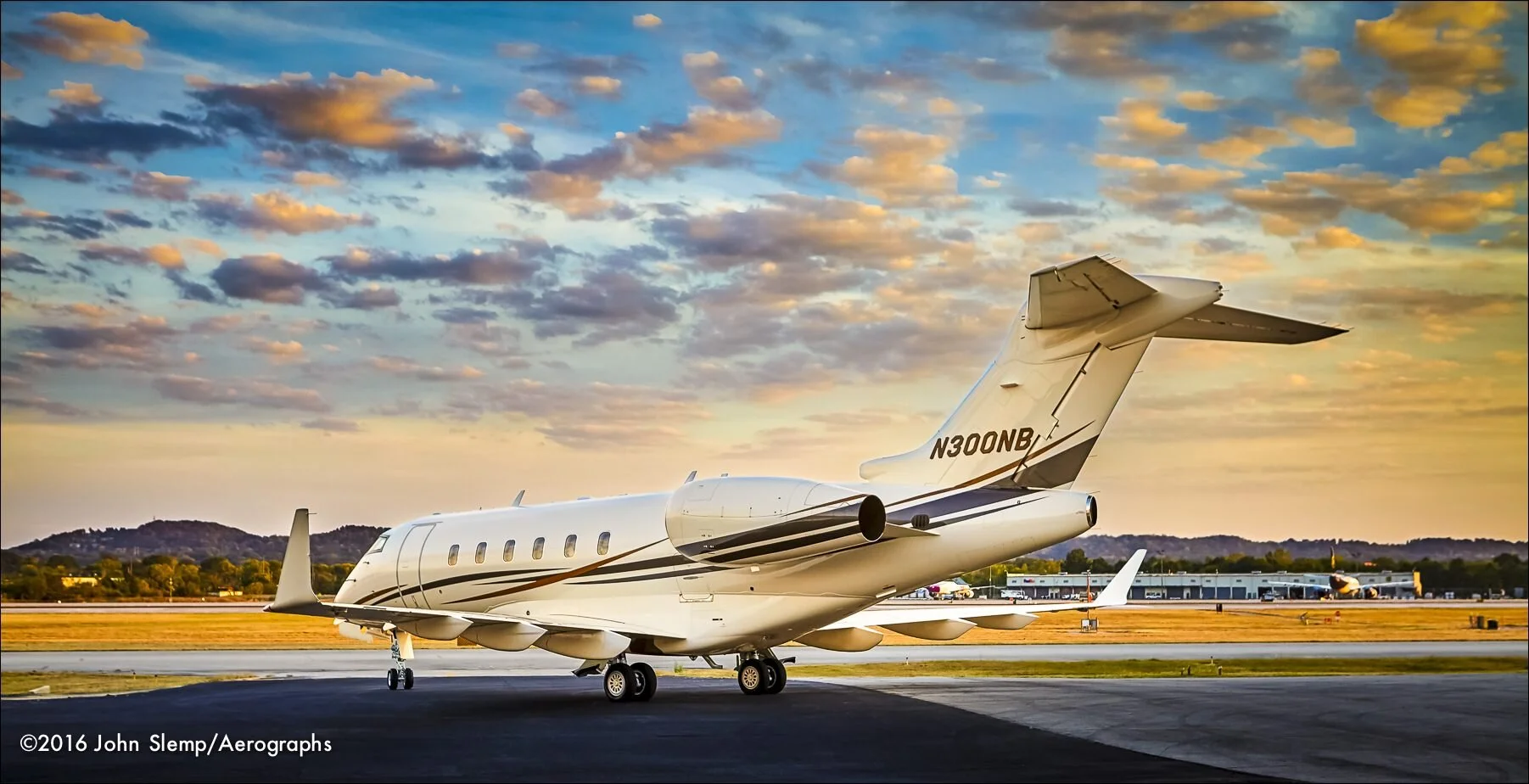
Bombardier Challenger 300, photographed recently on the ramp at Birmingham-Shuttlesworth International Airport.
Recently I had the opportunity to photograph a Bombardier Challenger 300 that is being offered for sale. The creative brief was to capture images of the aircraft exterior from several different viewpoints, the interior cabin and cockpit. While it sounds simple, there are a host of factors that can greatly influence the outcome of a shoot.
Upon arrival, what I tend to do is "look around," otherwise formally known as a site survey. Although obvious, it is an important step. It allows me to get an idea of which way the sun is moving (I tend to use natural light a lot for exterior images), the background possibilities, and what other obstructions/surprises I might have to consider. Local knowledge is key, and I'd be foolish if I didn't speak with the ground crew or pilot about what might be expected. It also allows for a discussion regarding time, and how much I might or might not have. Aircraft don't serve their purpose on the ground, and thus should be expected to have a limited period of ground time. There is nothing worse than "shootus-interruptus," due to poor planning. Similarly, rushing a shoot usually reduces the amount of "attention to detail" that can be paid a particular image, which is never a good thing.
Coordination with the ground crew regarding power to the aircraft, and availability of a tug to relocate the aircraft away from usually unsightly hangars is also important. If the weather is poor, and it must be shot in a hangar...well that's always a factor to be considered, and should be discussed up front with the client. If no representative is on site to "approve" images, then the photographers discretion becomes the deciding factor, which is covered in my contract.

Depending on the time of year, I like to consider what kind of skies that will be prevalent, and how to accentuate the positive, or how to work around a smoggy, milky summer sky. Shooting earlier or later in the day can help a lot, or by shooting at night, the sky almost becomes a moot point. Of course, that almost always necessitates the use of artificial lighting to get the job done, which again takes time to set up, and the necessary equipment.
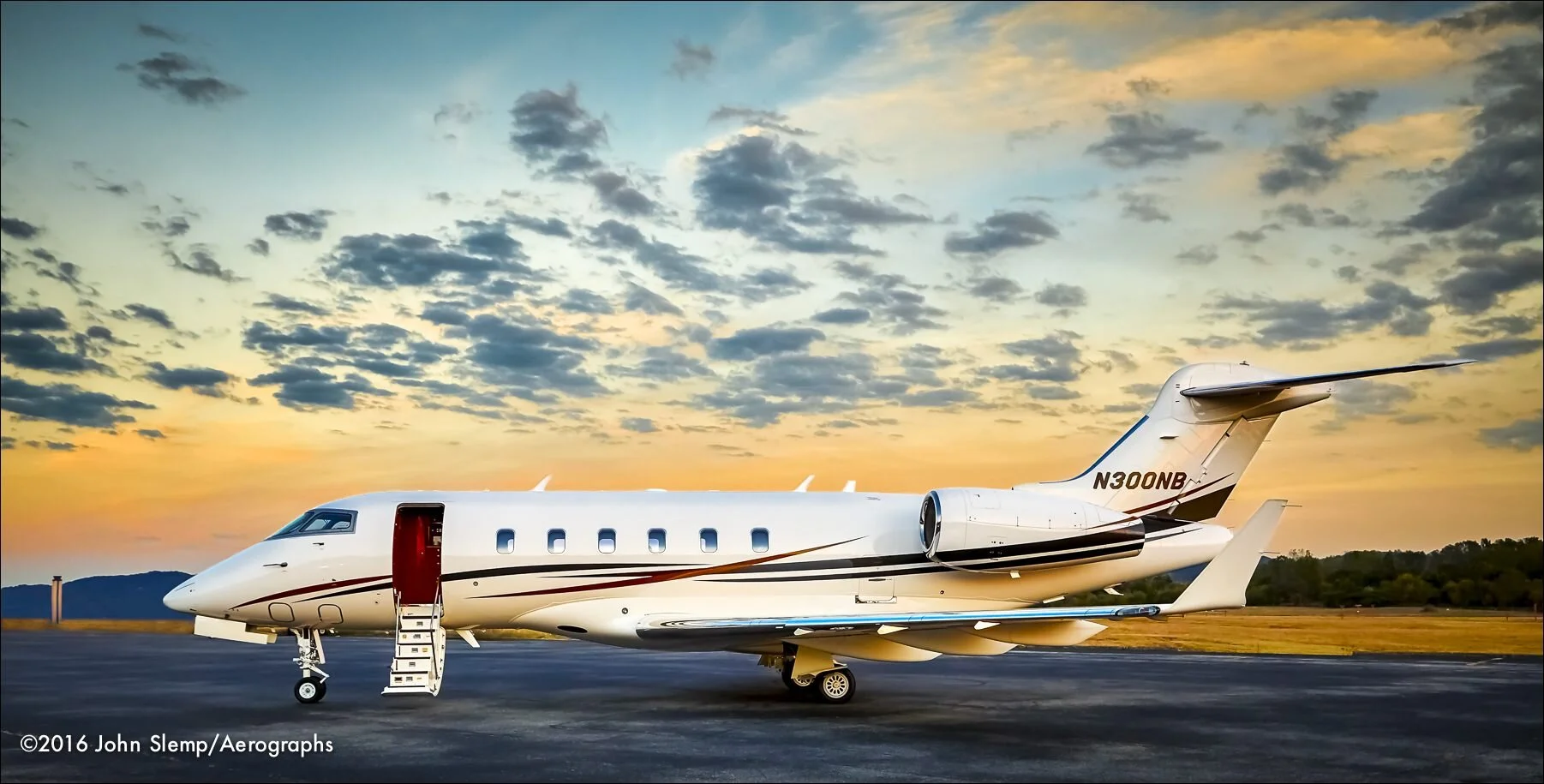
As an aside, I have heard it advocated that the ramp should be wet for the "hero" shot. To my way of thinking, this is ludicrous, as it creates a visual formula and allows for zero creativity in crafting what could otherwise be a distinctive image. A quick glance at the cover of any of the trade magazines supports my position that this "cookie-cutter" approach stifles creativity, and leads to the same visual solution repeatedly. This approach is further evidenced by the use of three small (usually over-exposed) strobes to illuminate the landing gear. While the need to separate the aircraft from the background is understandable, doing so with a sledgehammer lighting approach is less than desirable, and is evidence of poor craftsmanship. Besides, if every cover looks the same, how is your aircraft going to stand out from the crowd? If the goal is to attract attention to your offering, shouldn't it be presented in the best light possible, literally speaking?
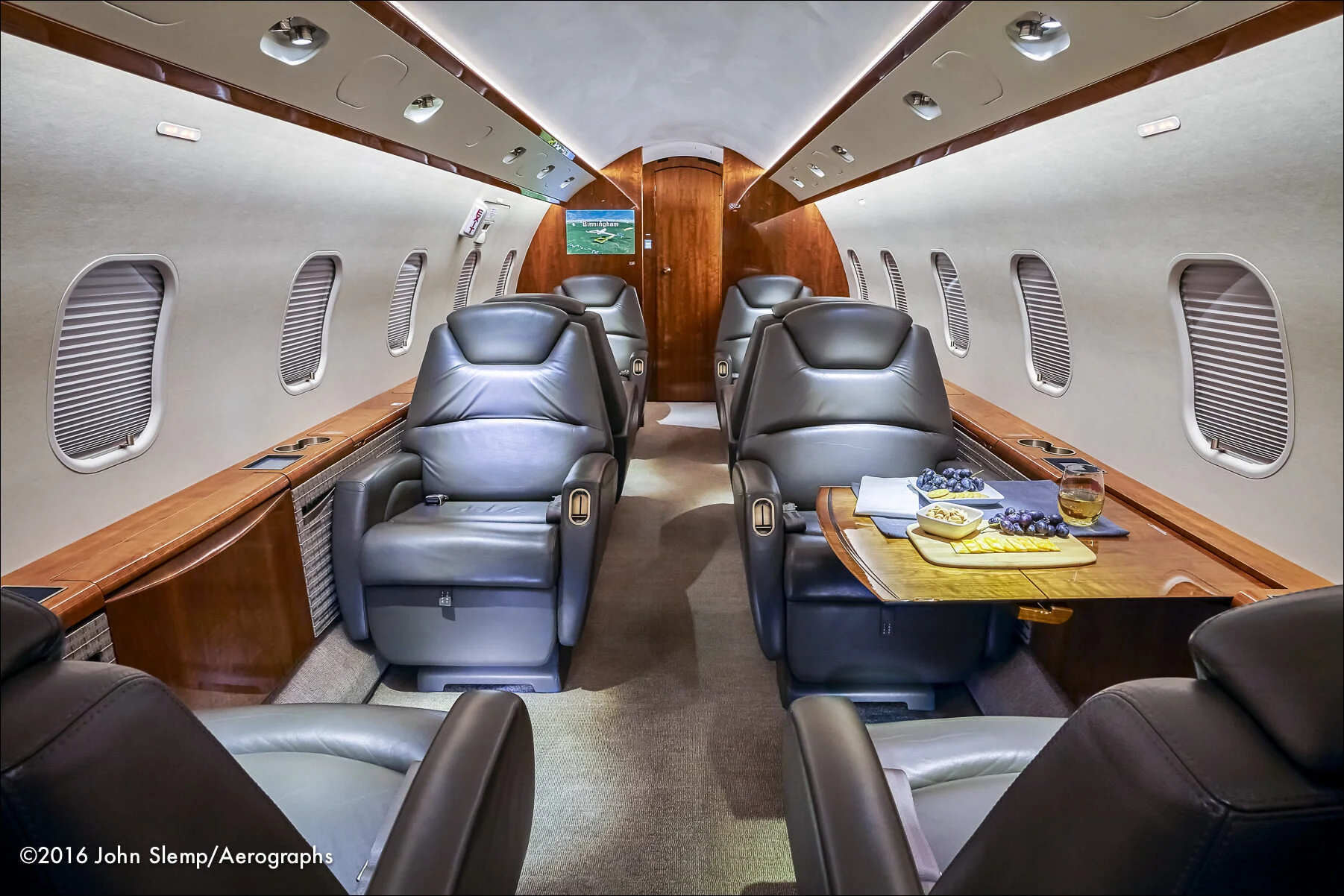
Whenever I'm asked to photograph an aircraft that is to be put up for sale, one of the key considerations is that the aircraft be clean, inside and out, prior to my arrival. Again, it sounds simple, but it has a dramatic impact on the quality of the images. In this particular instance, the crew chief did a wonderful job of having the aircraft ready, and it showed. It also allows more time to get the lighting, the angles, and needed tweaks taken care of, as usually only one day is allocated to this type of shoot. If my time is spent cleaning, then I'm not shooting. This makes for a better end product too.
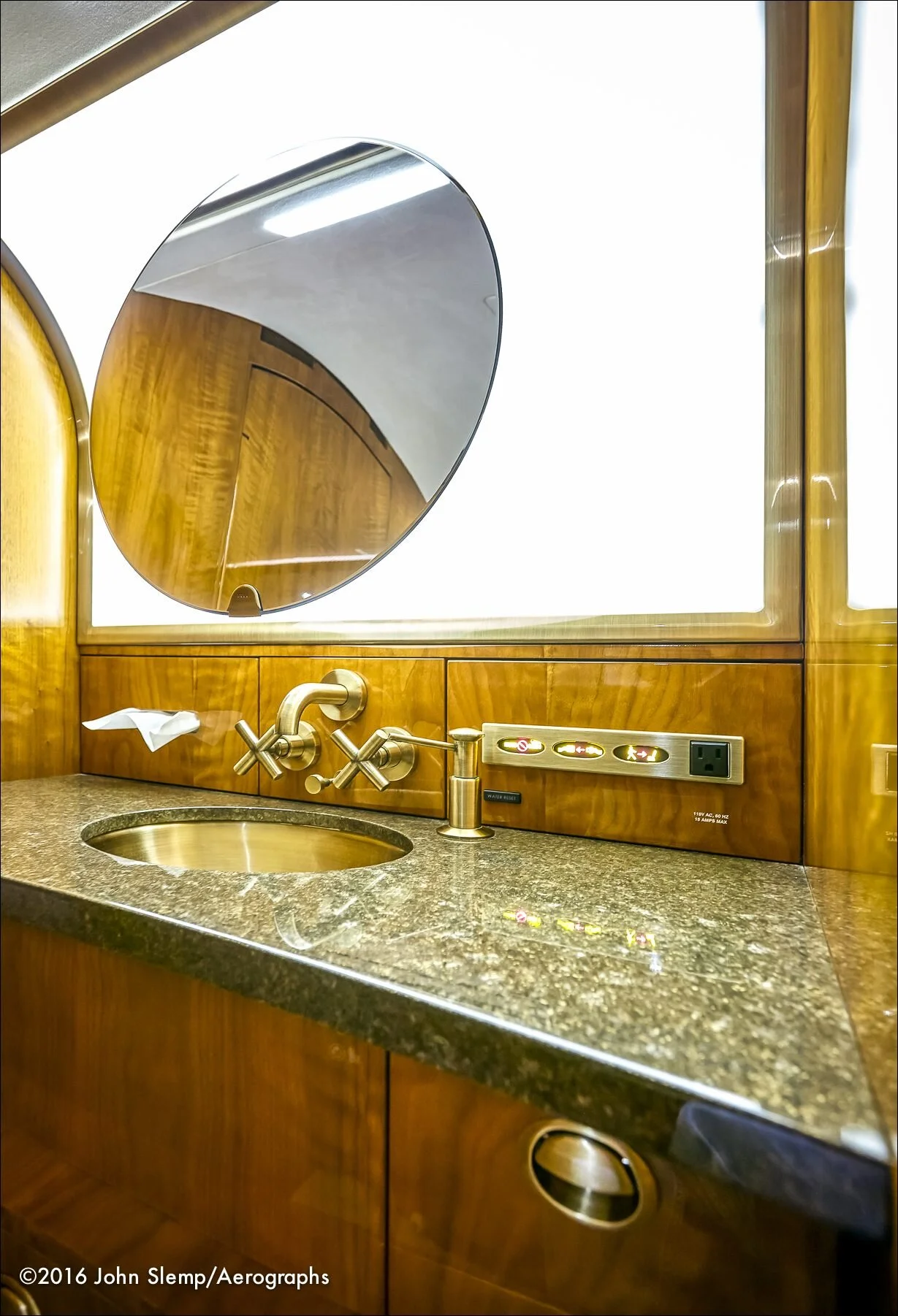
What do I mean by "clean?" Shoe scuff marks need to be removed from surfaces where they normally accumulate (including the stairs), carpets should be clean and dry, the galley and bathroom should be spotless, including all glass surfaces, such as mirrors. The cockpit is especially worthy of attention as pilots are not well known as a fastidious bunch. Charts, notebooks, pens, manuals and headsets should all be removed. The panel should be clean and free of dust, smudges, fingerprints, and coffee stains. Sheep skin seat covers and foot wells should be vacuumed.
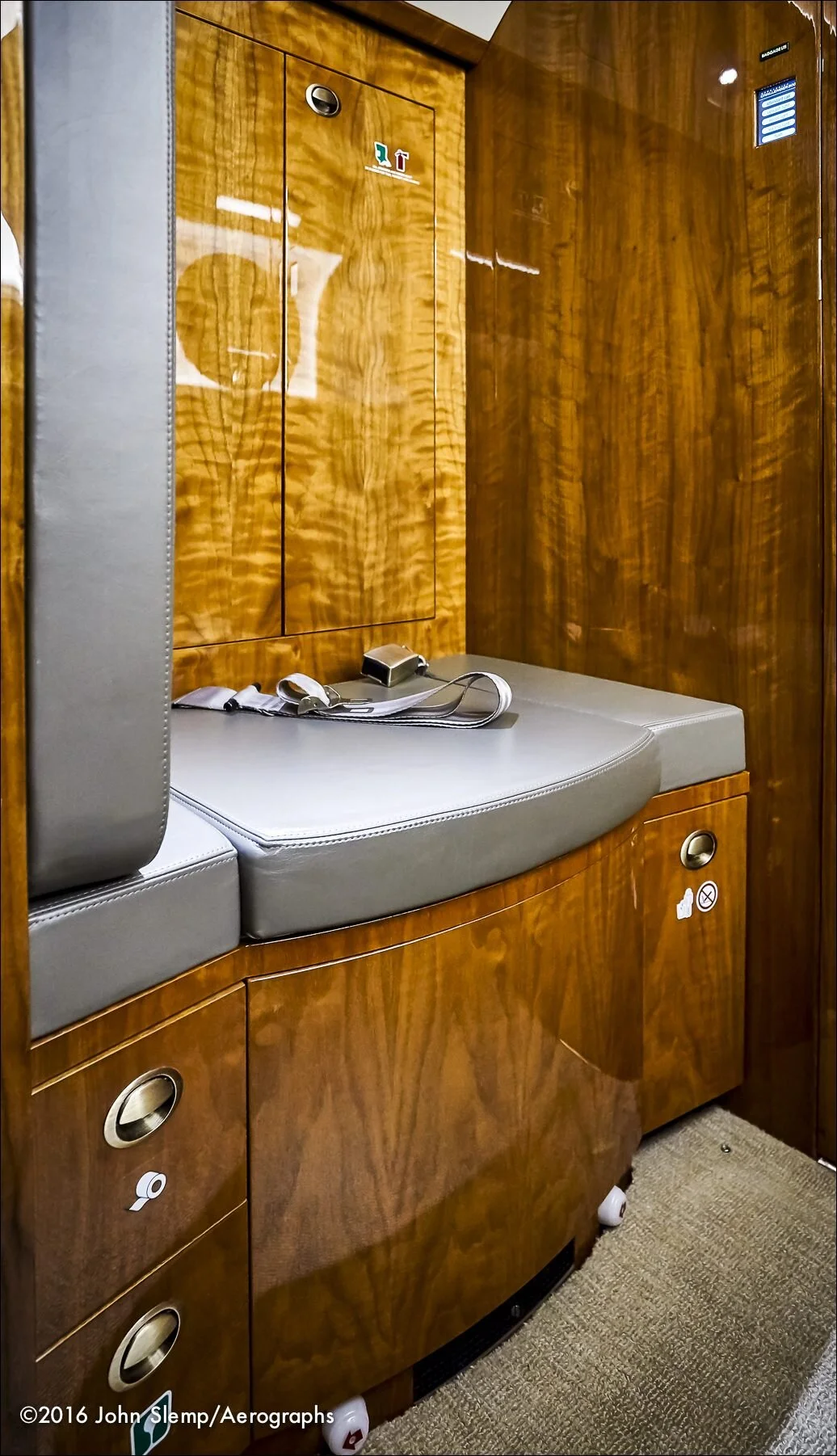
I say this because today's high-resolution cameras and lenses are so sharp that "if it's there, it will be in the shot." While some things must be removed in post-production, it is a poor substitute for proper preparation, and extensive retouching should result in extra fees. Baggage compartments should at least be vacuumed, and don't forget to clean the drop-down tables and cup-holder receptacles. Cabin seats should also be vacuumed and if necessary, wiped down. In short, the aircraft needs to look like it just came off the production line. Virtually any used product that looks "tired" will not sell at a premium, and aircraft are no exception.
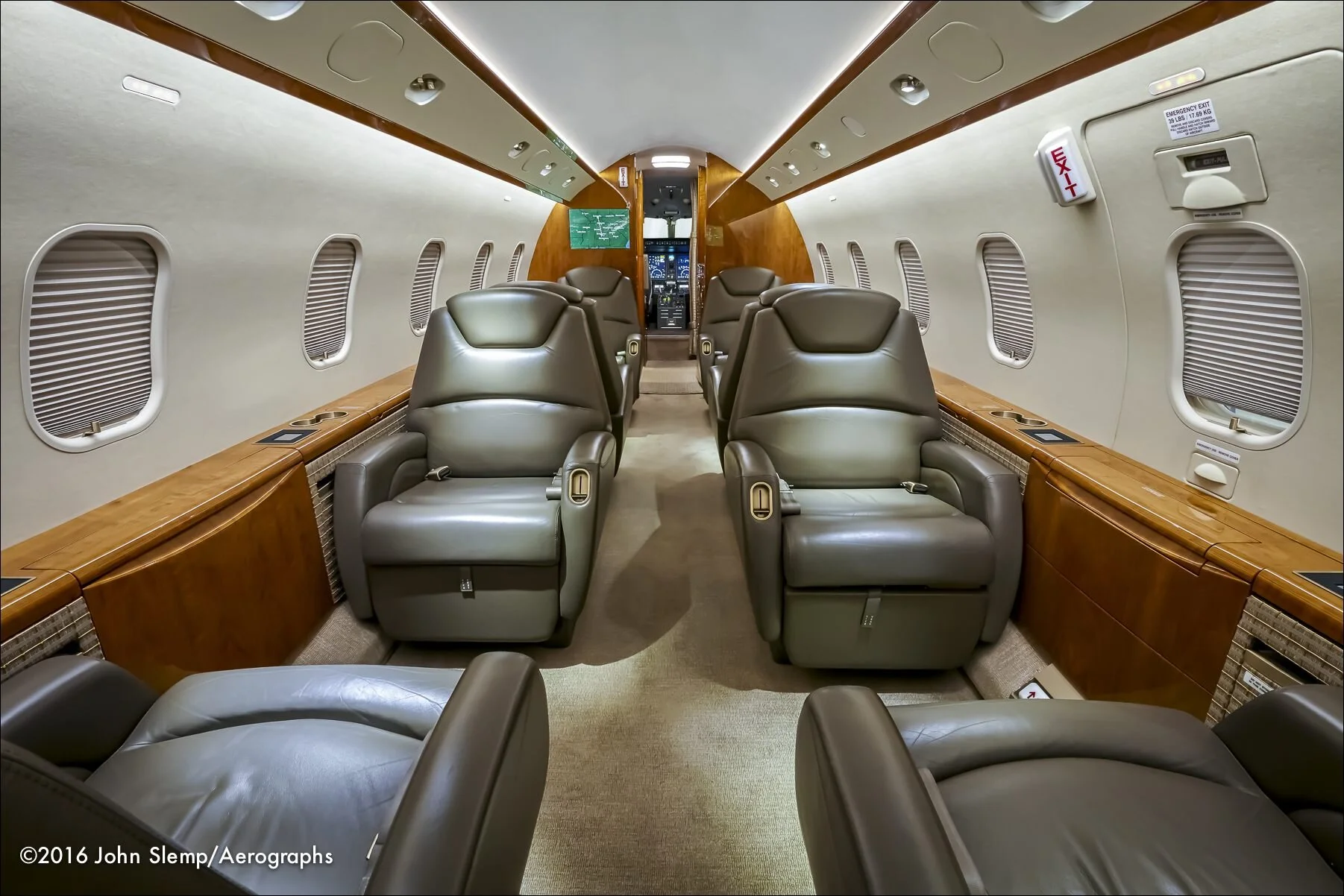
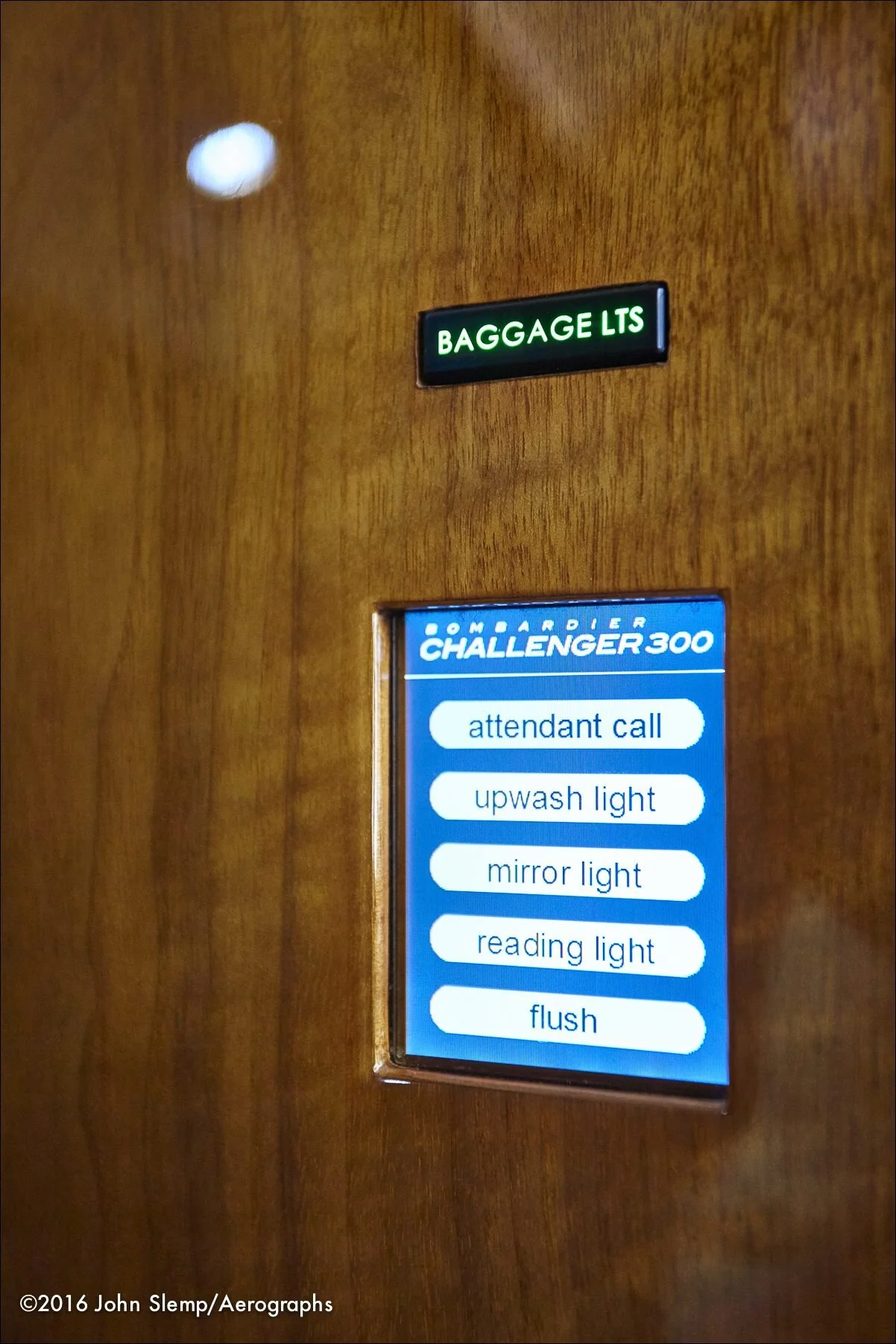
Details can be important too as they convey a sense of refinement at a glance.
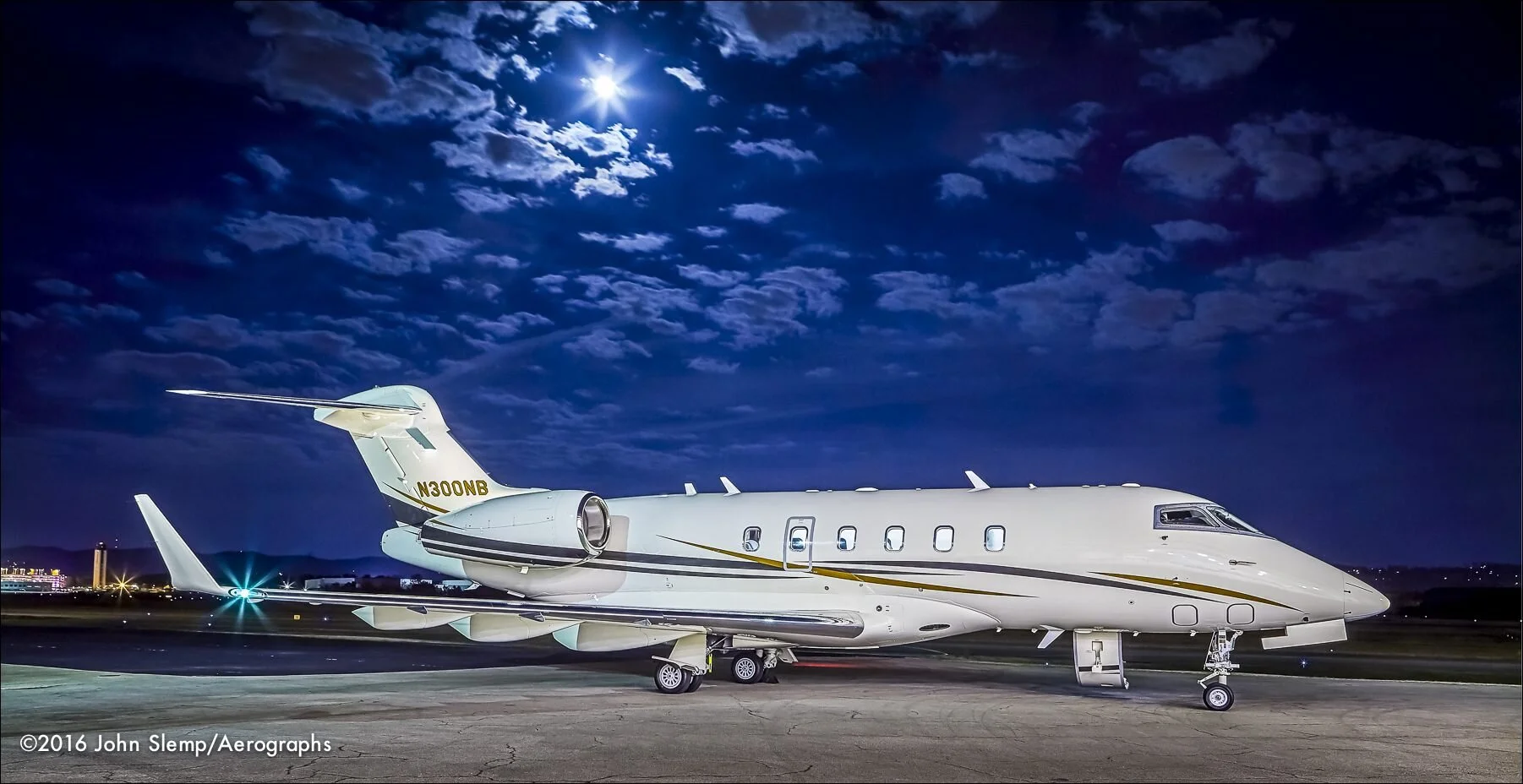
One other important photographic consideration is color. Make sure your photographer is using a color reference chart, especially in the cabin shots. Accurate, consistent color is achievable, and should be insisted upon.
If attention is paid to these elements, then a successful collaboration can be quickly and seamlessly achieved, resulting in images that anyone would be proud to show.
©2016 John Slemp All Rights Reserved