The Mighty Antonov...
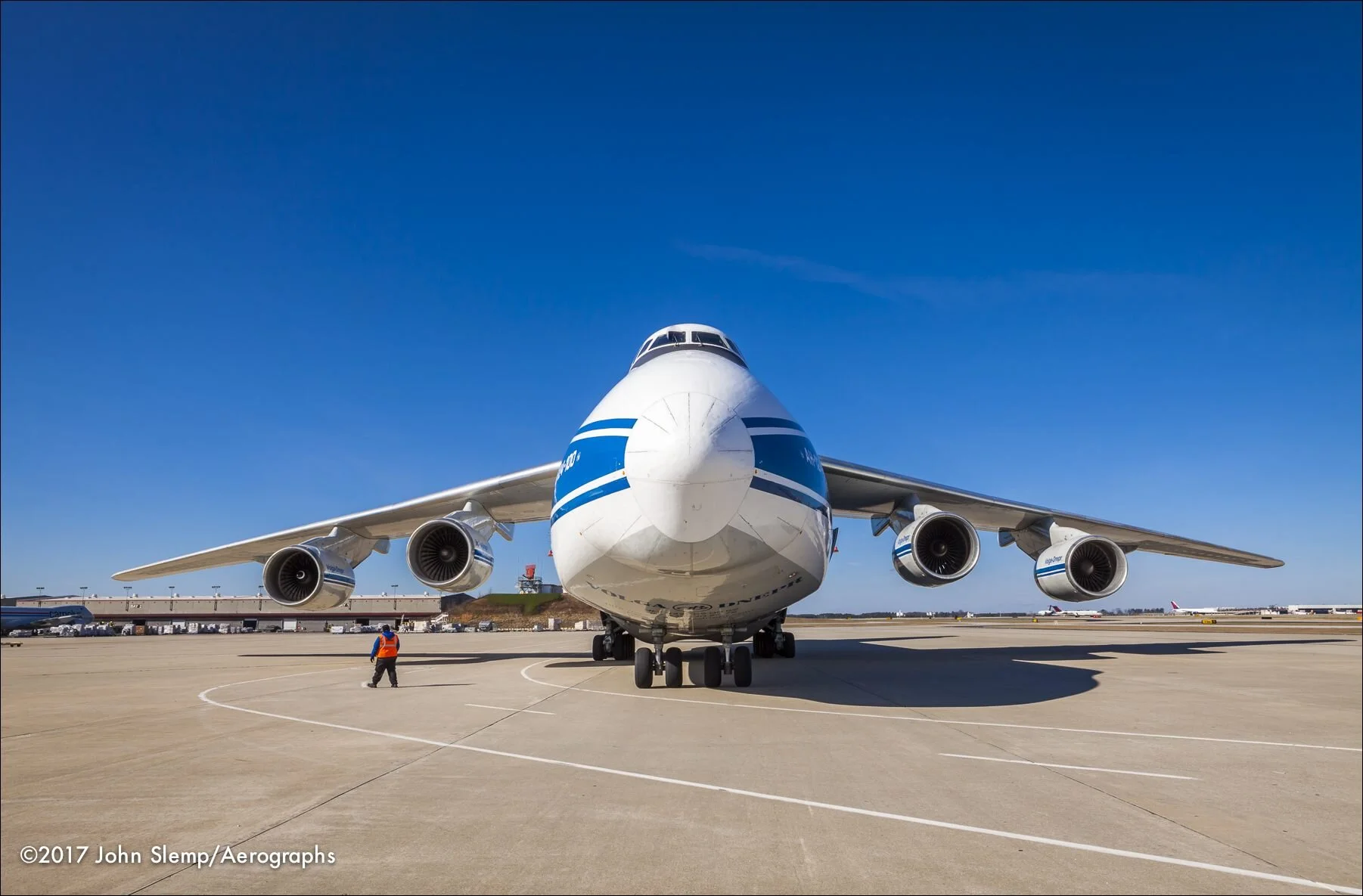
The Antonov AN 124-100 shortly after arrival at Atlanta's Hartsfield-Jackson International Airport.
As you may have seen in recent news reports, the country of Chile has been suffering from an unprecedented series of fires. It is summer in the southern hemisphere, and this country that heavily relies on their forests for wood products and vineyards for wine production is in desperate need of help.
As it happens, Helicopter Express, a local Atlanta company that specializes in fire-fighting, has been hired by the Chilean government to bring four helicopters, a large maintenance truck/trailer combo, pilots and ground support personnel to Santiago, Chile, to help in that fight. To that end, the massive Antonov AN 124-100, from the Volga-Dnepr Unique Air Cargo company was hired for that task.
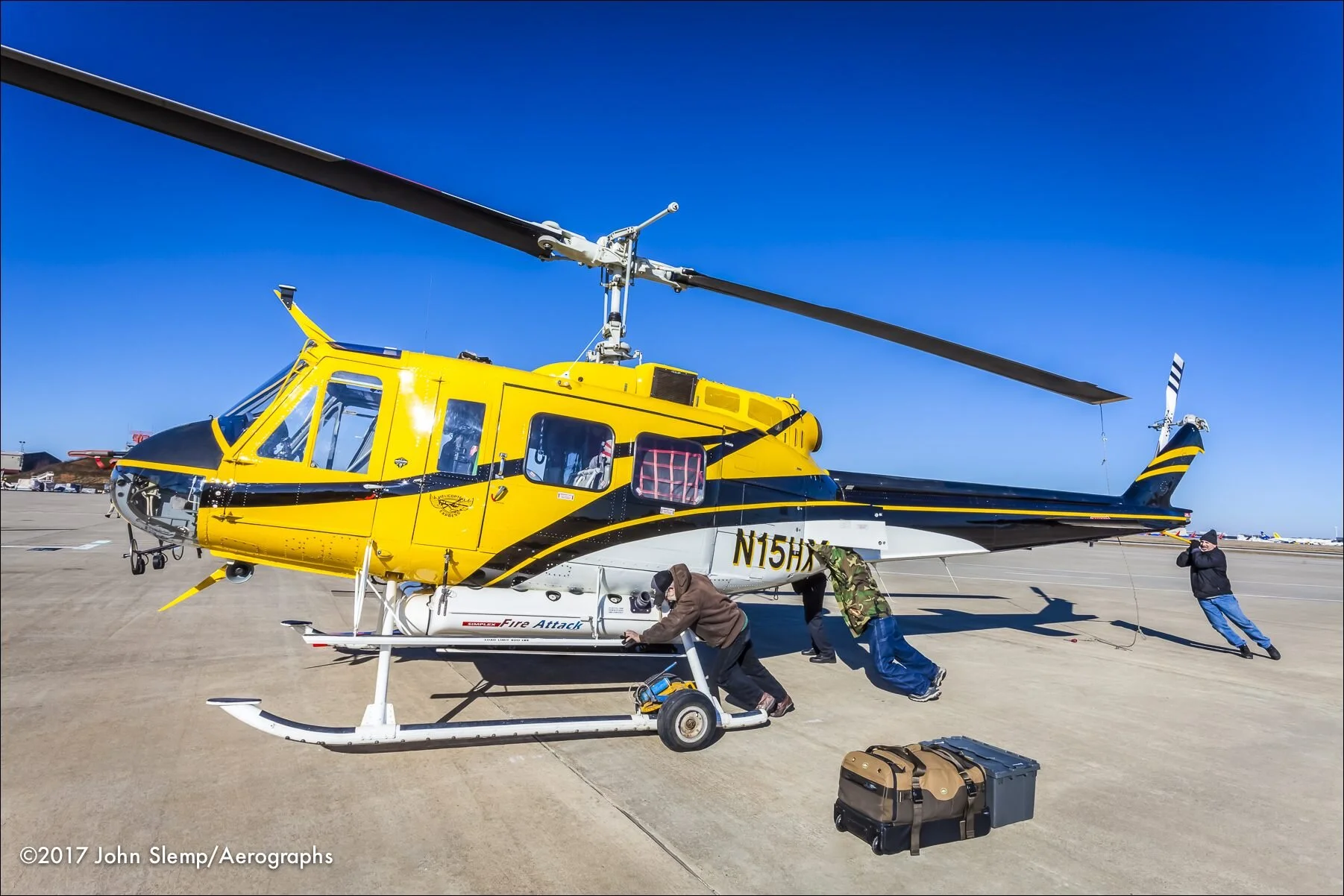
Helicopter Express crewmen push a Bell 205 A-1 into position for cargo flight preparation.
The Antonov is Russia’s answer to the American Lockheed C-5M Galaxy cargo aircraft that I was familiar with. After a quick visit to Wikipedia, I learned that the Antonov can carry about 20% more than a C-5, and has an internal 20-ton crane system. Since the C-5 has never been sold for civilian use, the Antonov fleet stays busy worldwide carrying outsized and extremely heavy cargo for a wide variety of clients, including oil and gas companies, automobiles with a special double-deck system, dense earth moving equipment, military loads, and disaster relief supplies. It can reportedly carry up to 330,000 pounds of cargo! This particular load was about 26 tons, so I’m sure the Antonov wasn’t even straining hard when it lifted off.
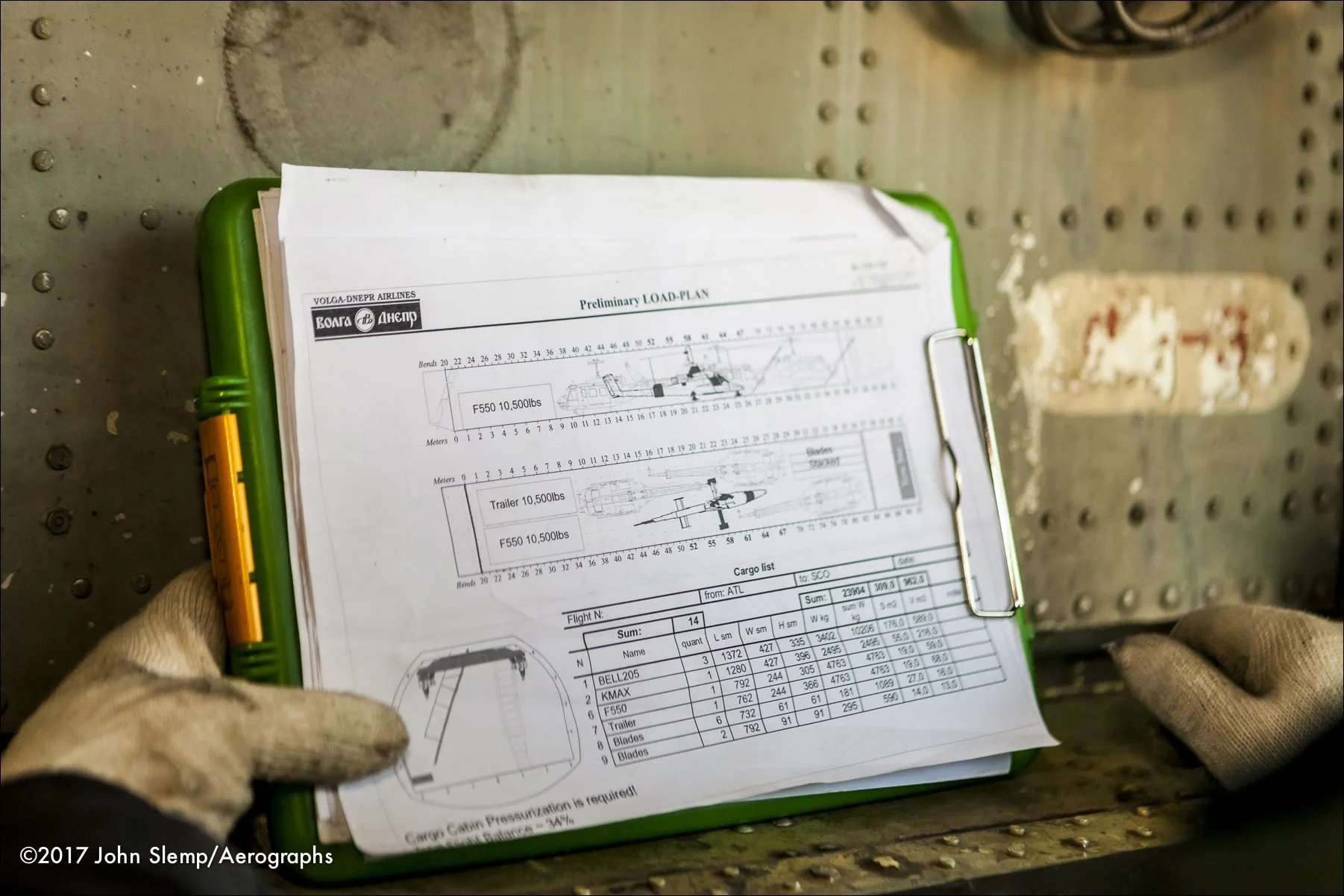
The loading diagram has both vertical and overhead profiles, along with each item's weight.
With 24 landing gear tires, four in the front, and ten on each side, spare tires and other maintenance items are carried aboard routinely, as the Antonov often operates from airfields that otherwise have no support capabilities for such a large aircraft.
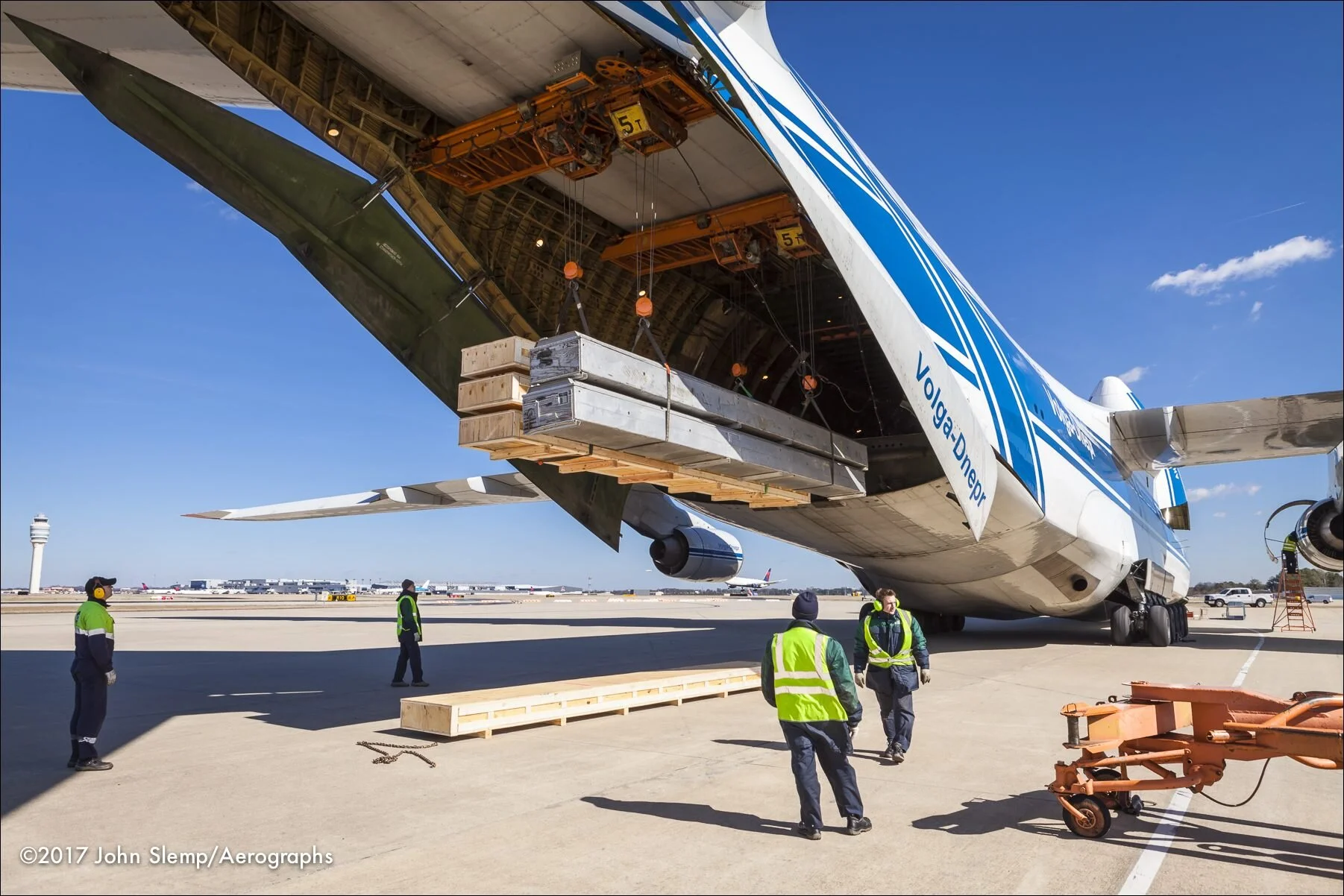
The overhead internal crane easily loads several boxed up helicopter blades into the rear.
The aircraft opens at both the front and the rear, and can “kneel down” in front to allow vehicles to drive on via an internal ramp. The floor plates are made from titanium, making it very strong, but lightweight. Anchor points distributed across the floor allows cargo to be fastened securely, and special blocks can be temporarily anchored where needed so the internal 100 ton winch can pull cargo aboard.
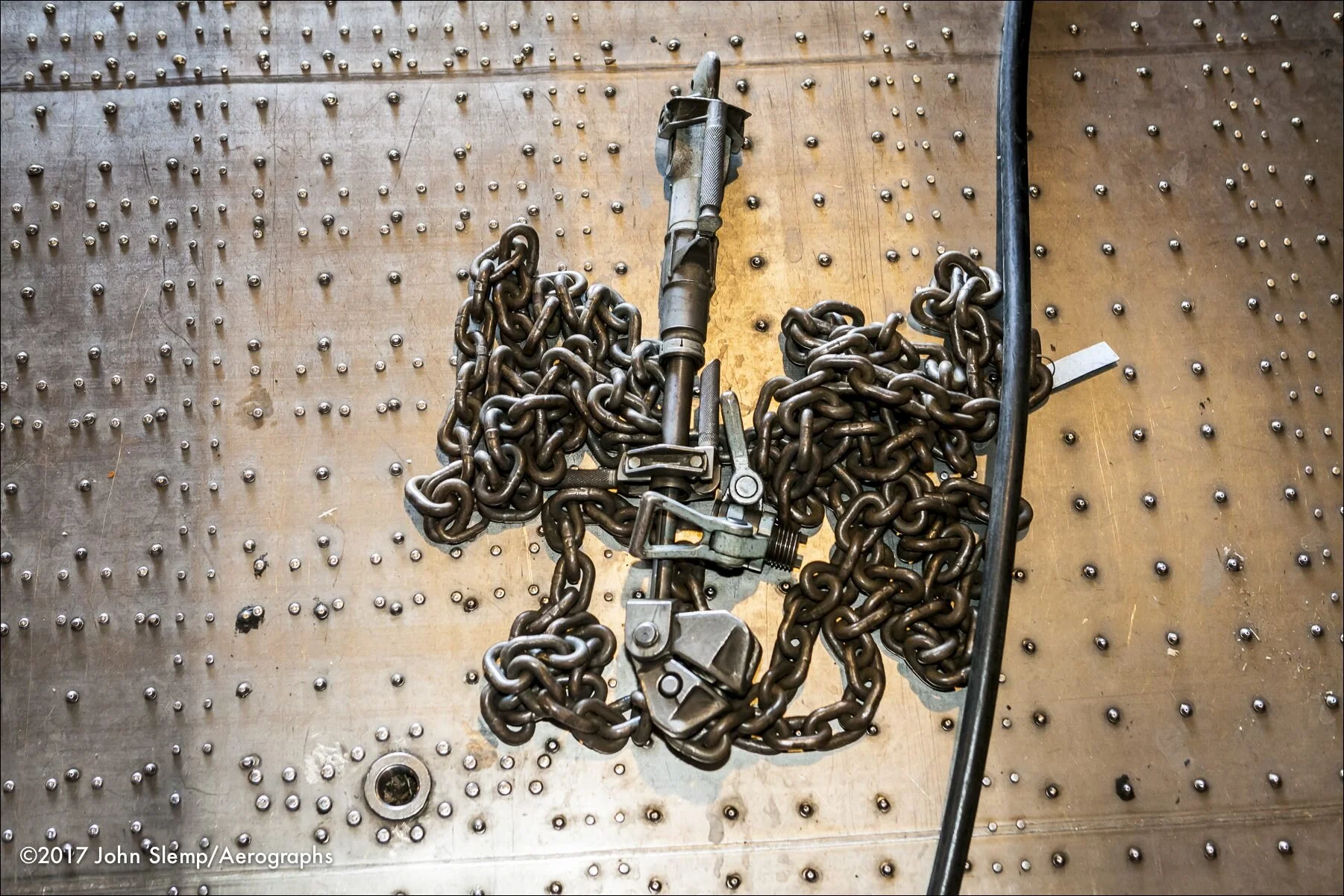
The round anchor hole is threaded to accept the floor anchor, and the chain secures the load.
In addition to cargo, there is a passenger compartment in the upper rear of the aircraft that allows for up to 88 passengers to be carried along with the cargo load. A flight crew of six is needed to operate the aircraft, including two pilots, two flight engineers, a radio operator, and a navigator. Future upgrades will reduce the crew to four. Additionally, it is common to carry at least six crewmen to manage the loading and unloading of the aircraft. For this 11-hour flight, the aircraft took on 46,000 gallons of fuel. At maximum take off weight, the aircraft requires 8,270 feet of runway, or about a mile and a half. The auxiliary power unit is located low in the fuselage, behind the main landing gear, and the exhaust heat can cause serious damage if the pavement is not protected.
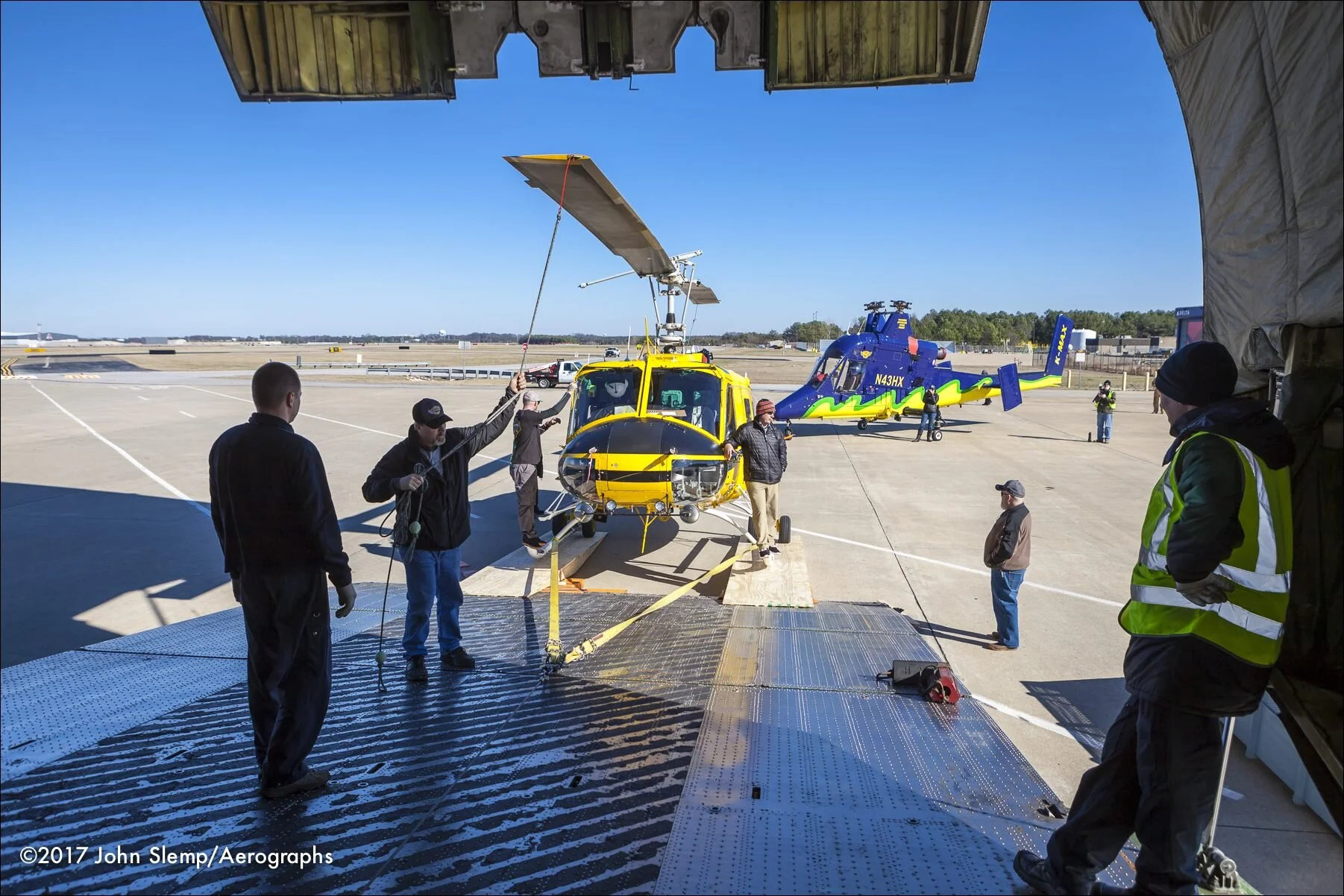
Notice the pulley wire hooked to the web strap. It is pulling the helicopter up the ramp.
Make it a priority, if you ever get the chance to see one. While it’s not the prettiest aircraft ever designed, it certainly is one of the mightiest, and will most likely redefine your idea of “large.”
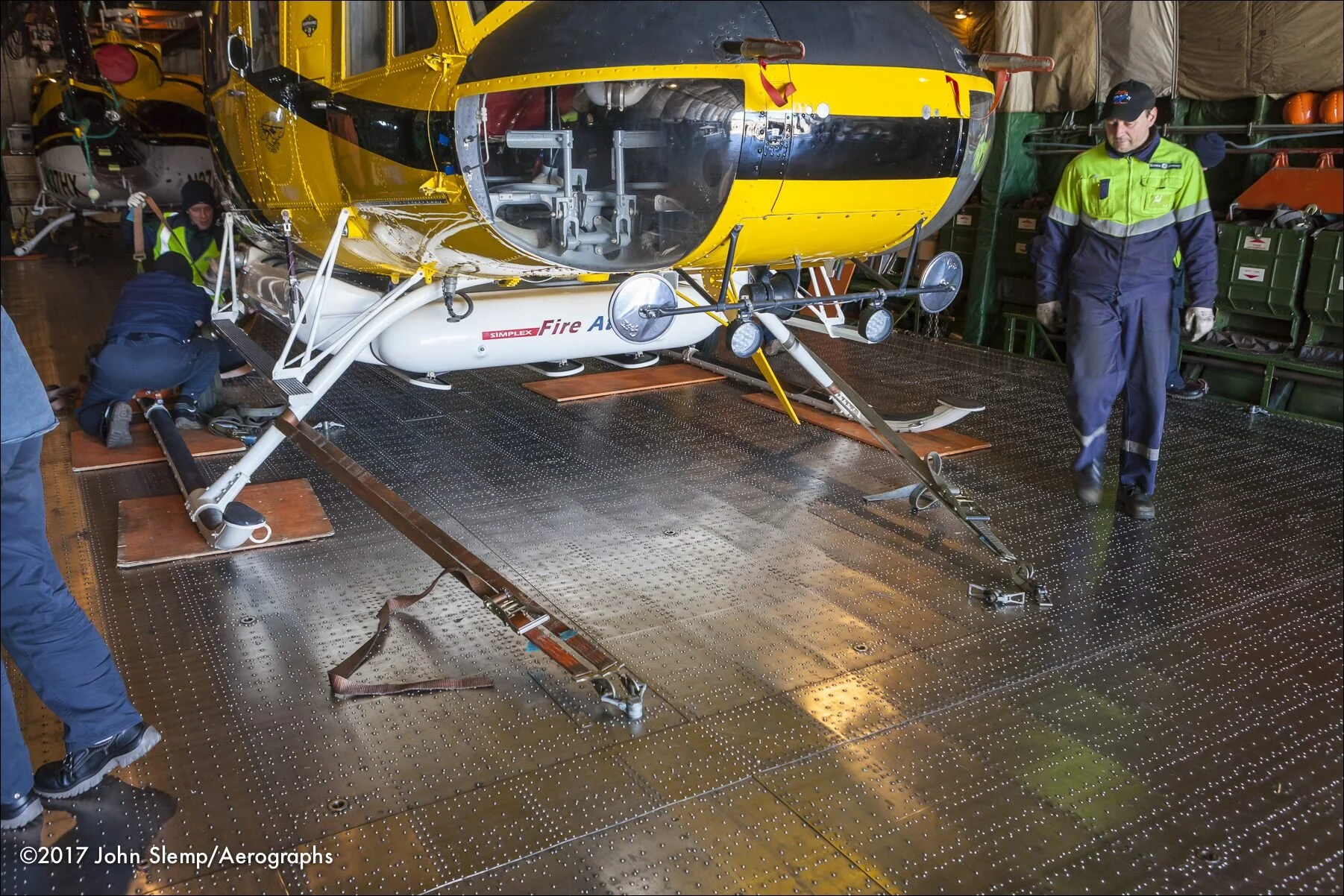
The aircraft are "nested" together, and securely anchored to the floor. Wooden sheets protect the floor.
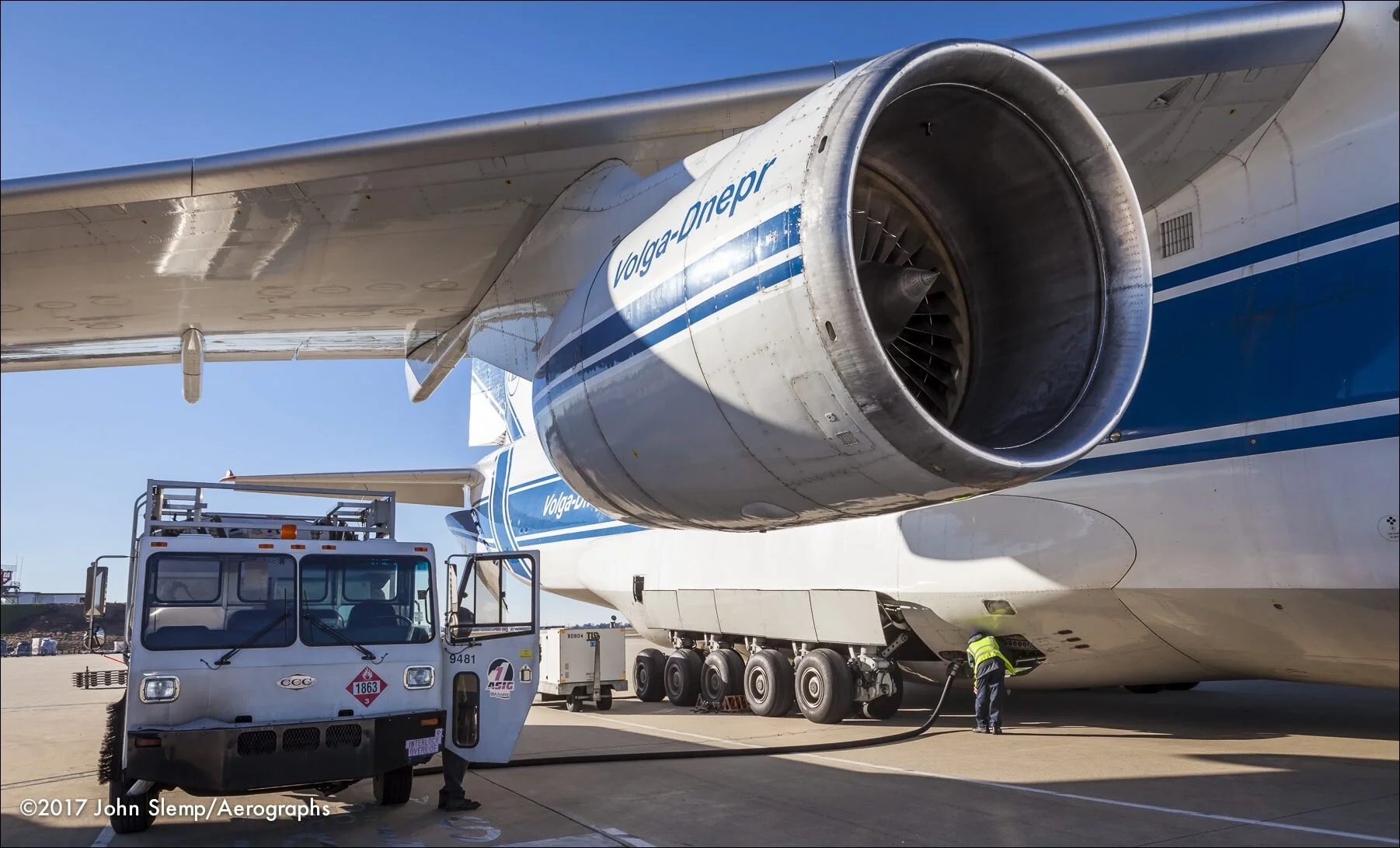
Notice the size of the tires, in relation to the man. Each engine produces 50,000+lbs of thrust.
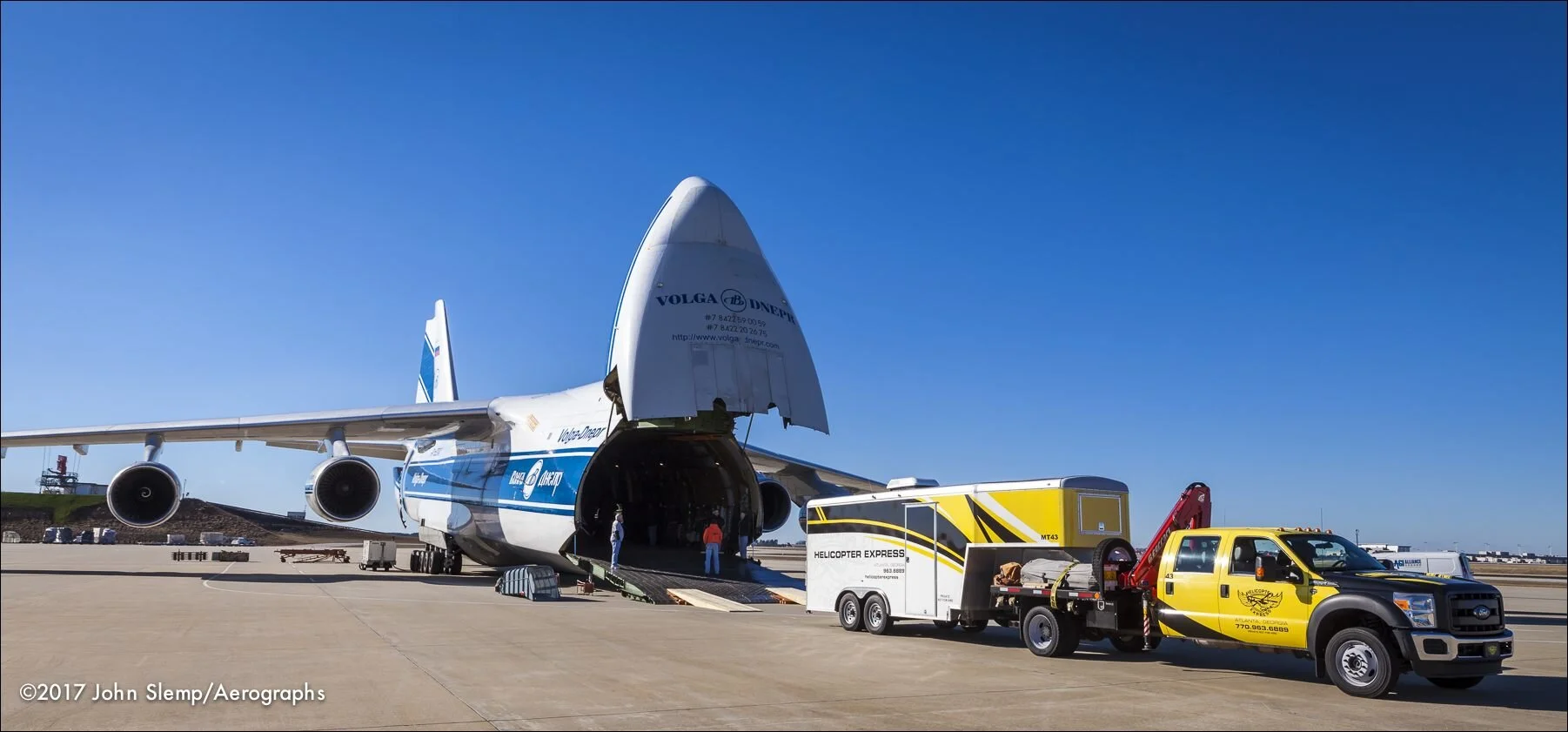
The trailer and truck were the last items loaded, with room to spare. The red crane on the truck bed easily mounts/dismounts the helicopter blades from the aircraft.